
Strong financial performance for a sustainable AGSA
Performance against 2025-26 targets
| Key performance indicator | 2025-26 target | Year-end actual | Status |
|---|---|---|---|
| Net surplus | 2% – 5% (after fully provided for bonus) | 4,4% | |
| Cash safety margin | 2 – 3 months average across whole year | 2,76 months | |
| Overhead to income ratio | 36% | 38,5% | |
| Contracted work capacity as % of total revenue | 16% | 11,7% | |
| Gross margin | 40% | 40,6% | |
| Average collection of debt | 85% – 90% | 94% | |
| Clean audit | Clean audit opinion | Clean audit opinion | |
| Complainant satisfaction with responsiveness and resolution of threats and intimidation | 85% – 90% satisfaction | 87% |
Financial performance and sustainability
The 2025-26 financial year unfolded against a backdrop of modest economic growth, sustained fiscal pressure, elevated geopolitical uncertainty and persistent structural constraints across the public sector. While inflation eased over the period, volatility in global energy markets and constrained government revenues continued to influence audit fee affordability, payment behaviour and audit risk profiles. Within this environment, the institution maintained a clear focus on financial resilience and disciplined financial management while delivering value adding services.
- The net surplus was maintained within the approved 1 – 4% range, supporting internal funding requirements and longterm sustainability.
- Gross margins were preserved at target levels, driven by an optimised staff mix, strong own-hours recovery and disciplined utilisation of contracted work creditors.
- Cash buffers were maintained within target thresholds, ensuring the institution’s ability to meet its obligations and absorb revenue fluctuation inherent in the audit cycle.
Audit income
Audit income increased by 5%, from R5 265 million to R5 538 million, primarily own-hours revenue of R4 623 million (83% of total audit income). This represents a 6% year-on-year improvement, marginally exceeding the forecast. Continued leveraging of the Ahluma centre and structured resource pooling enabled more flexible deployment of internal capacity, improved workload balancing and enhanced productivity across portfolios.
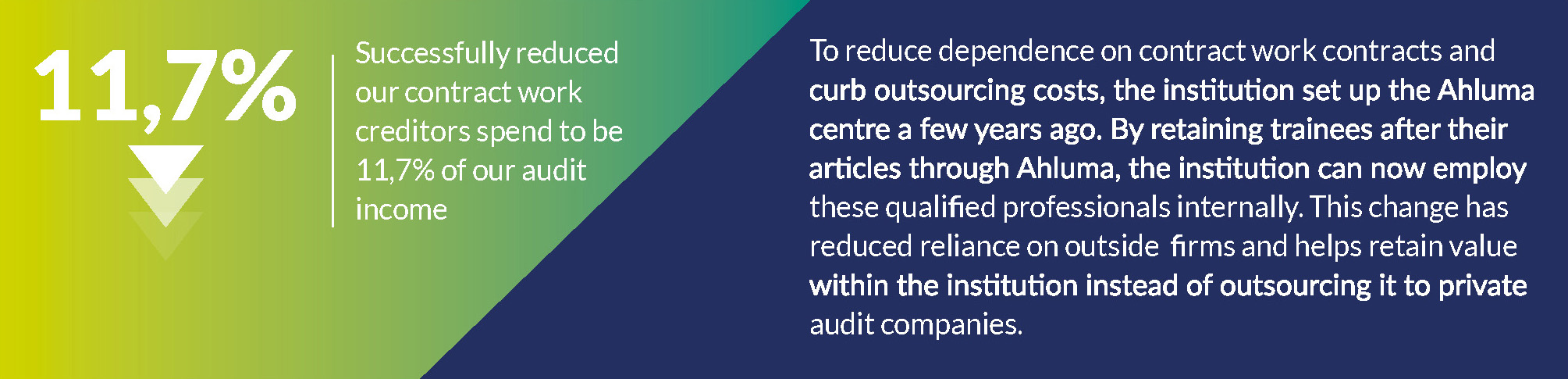
Contract work creditors income remained stable at R650 million, accounting for 11,7% of audit income below the budgeted 16% and forecast of 15%. This outcome reflects deliberate optimisation of ownhours recovery, with positive implications for margin preservation. Gross profit amounted to R2 249 million, representing 41% of audit income, in line with target, forecast and prior-year performance.
Net surplus and cash safety margin
The year-end cash and cash equivalents increased to R1 379 million with a net surplus of R243 million. While lower than the previous year, the net surplus remained fully aligned with the institution’s funding model principles and the approved range. This has enabled the institution to maintain a cash safety margin of 2,76 months of operating expenditure, reinforcing financial resilience amid fluctuating revenue flows and auditee payments. The resulting working capital ratio of 3,09 remained well above industry norms, reflecting strong liquidity.
Debt collection
The gross debtors’ book closed at R1 464 million, demonstrating strengthened debt collection. Debt collection performance strengthened further, with yearto- date collections reaching 94%, exceeding the 85% target. Targeted debt restructuring initiatives, particularly within financially distressed municipalities, supported both cash flow management and auditee sustainability.
In the Northern Cape, the AGSA partnered with the provincial treasury to identify 13 municipalities with significant outstanding debts. These municipalities have been allowed to pay off current debts over four years – factoring in future audit fees. Provided the agreements are held, the AGSA will write off the interest at the end of the four years and will withdraw litigation. The AGSA’s effort was fully supported by the Premier of the Northern Cape, who raises the matter at all Intergovernmental forum meetings and instructed members of executive committees to pay audit fees due.
To date, all affected auditees have adhered to the arrangement. Other municipalities across the provinces have entered into similar arrangements but over a shorter term (six months).
The National Treasury’s withholding of the equitable share payments from auditees with significant debt due to the AGSA has assisted debt collection efforts. The National Treasury also approved an enablement for the 1% auditees that are financially distressed and are unable to pay the AGSA (in line with section 23 of the PAA).
Overheads, cost discipline and assurance
Total overhead costs increased to 38,5% of audit income, marginally above the target of 36% but aligned with the forecast. This ratio excludes overhead costs capitalised for qualifying digital transformation assets. The increase was driven primarily by higher expenditure on technology and software, increased bad debt provisions, investments in training and personnel costs to expand digital and ICT capability.
The institution continues to strengthen its disciplined cost management posture, focusing particularly on enhancing oversight of technology spend, managing debt exposure and ensuring that digital investments translate into measurable productivity gains and, over time, a sustained reduction in the overhead ratio.
Cost containments during the year included deferring or pausing non-crucial discretionary expenditure and strengthening monitoring of benefits realisation across major investments. Accelerated cost containment (including improved overheads management), stronger benefits realisation and productivity gains from digital enablement are expected to progressively restore overhead ratios to target levels.
Supplier performance management
The AGSA has further strengthened procurement as a strategic enabler of value, execution discipline and risk mitigation. The supplier performance management framework has been embedded across strategic suppliers, supporting the digital transformation programme, contract governance, delivery assurance and innovation partnerships. These measures are improving value for money and positioning procurement as a key contributor to financial sustainability, disciplined execution and achievement of digital transformation objectives. The AGSA seeks to return to a 36% overheadto- income ratio by the end of 2026-27.
Capital expenditure, sequencing and funding
The total approved capital expenditure envelope has been sequenced across 2026-27 to 2029-30 to align with available free cash flow capacity. The AGSA’s capital investment posture remains firmly anchored in cash preservation, with focus on reducing balance sheet risk, protecting liquidity and safeguarding longterm sustainability in the current operating environment. This disciplined approach has informed clear sequencing decisions and trade-offs: platforms that are mandate crucial and enterprise enabling have been prioritised, large-scale transformations have been phased over extended periods and selected discretionary initiatives have been deferred. As a result, the projected cash flow profile remains fully affordable and aligned to institutional delivery capacity.
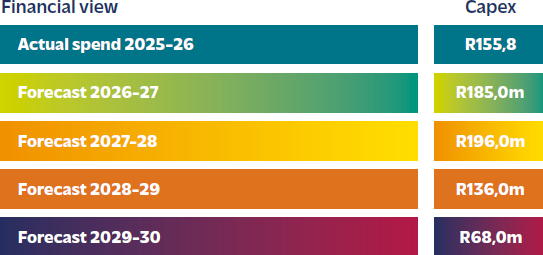
The capital portfolio aligns with the planned digital transformation to ensure architectural coherence, pacing and delivery readiness. Strong governance underpins this approach, with the business change and value office providing business case discipline and benefits realisation tracking. Oversight is provided by structures including the project portfolio investment committee, ASP steering committee. This framework will ensure that the capital programme through to 2029-30 is credible, controlled and aligned with the AGSA’s strategic priorities and financial sustainability objectives.
During the year, leadership shifted from accelerated capital deployment to capital discipline. In future, sequencing will be prioritised over pipeline expansion, cash preservation over speed and execution readiness over aspirational growth.
The emphasis on ASP ahead of other sizeable initiatives, including enterprise resource planning, is expected to materially reduce funding pressure in the later years of the plan. Importantly, this approach has significantly narrowed previously projected funding exposure and positions the AGSA to continue funding capital investments predominantly through internally generated resources rather than external borrowing. This will protect institutional independence, strengthen financial resilience and secure longterm sustainability.
Conclusion
The institution closed 2025-26 with stronger financial foundations, improved execution discipline and a clearer trajectory for longterm institutional sustainability. In the year ahead, leadership will focus on finalising capital budget sequencing to protect future cash flow resilience, implementing the future staff mix optimisation project and completing the business continuity management initiative to create a more resilient and sustainable operating model.
Performance against 2025-26 targets
| Key performance indicator | 2025-26 target | Year-end actual | Status |
|---|---|---|---|
| % of strategic risks managed (per ISO 31000 standard) | 80% – 90% | 87% | |
| Risk management maturity level/td> | Managed | Maintained level 4 (managed) | |
| Evaluation of an effective AGSA system of quality management by the auditor-general | Reasonable assurance obtained | Reasonable assurance obtained | |
| Ethics maturity level | Attain AA rating | Attained AAA rating |
Strategic risks and risk assurance model
The institution has made significant progress through the disciplined and deliberate implementation of its strategic risk programme. Risk management enables institutional objectives and underpins strategy. The strategic risk programme is a core element.
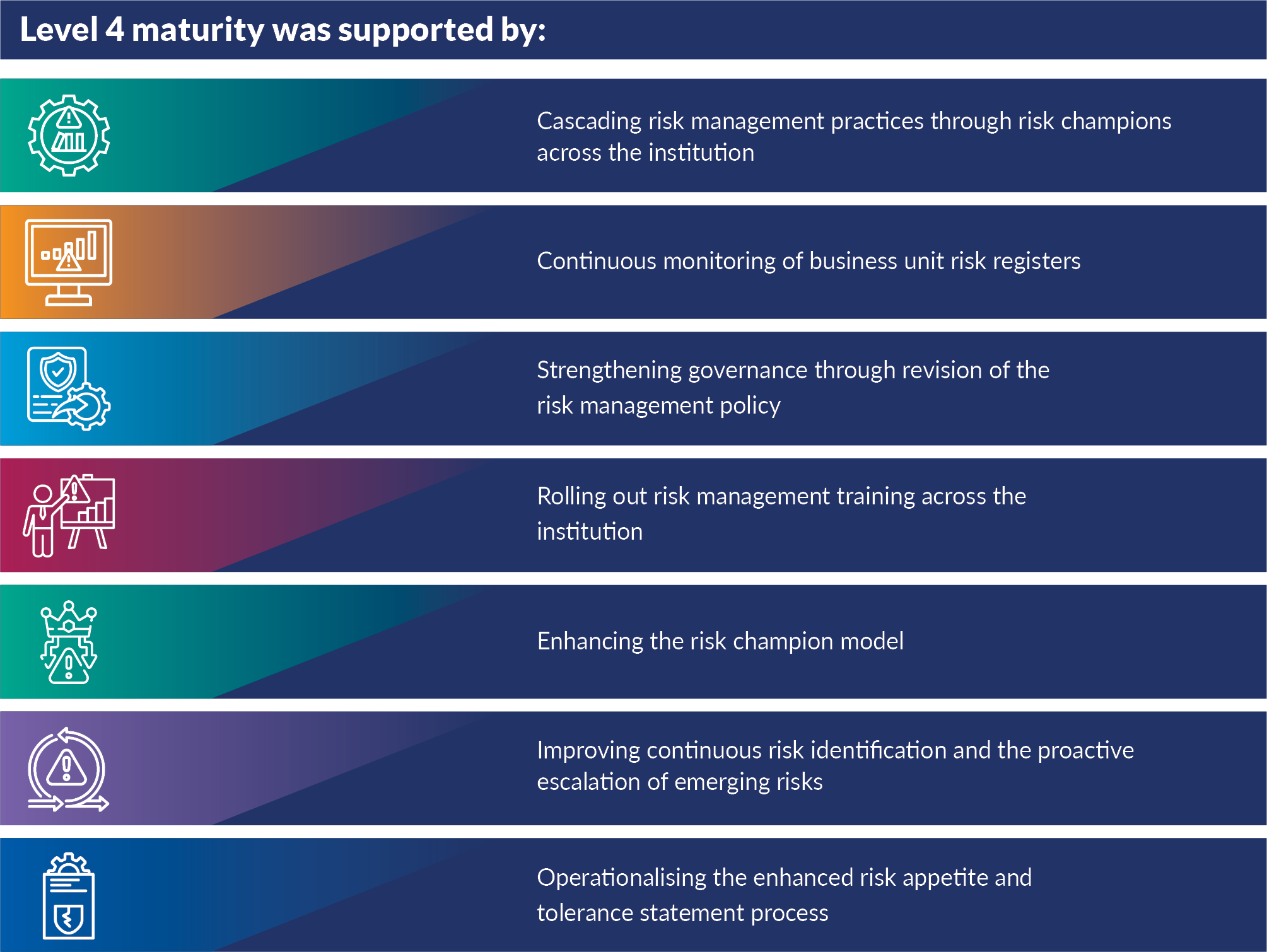
During the year under review, the audit committee monitored and mitigated key risks. Exco ensured that mitigations were rigorously implemented and tracked, with 87% of planned activities completed by year end. As a result, we maintained a level 4 (managed) risk maturity rating, afforded institutions in which practices are embedded, consistently applied and increasingly enable proactive decisionmaking. These results are a key component of the institution’s combined assurance framework, reinforcing confidence in the effectiveness of its risk management practices and governance processes.
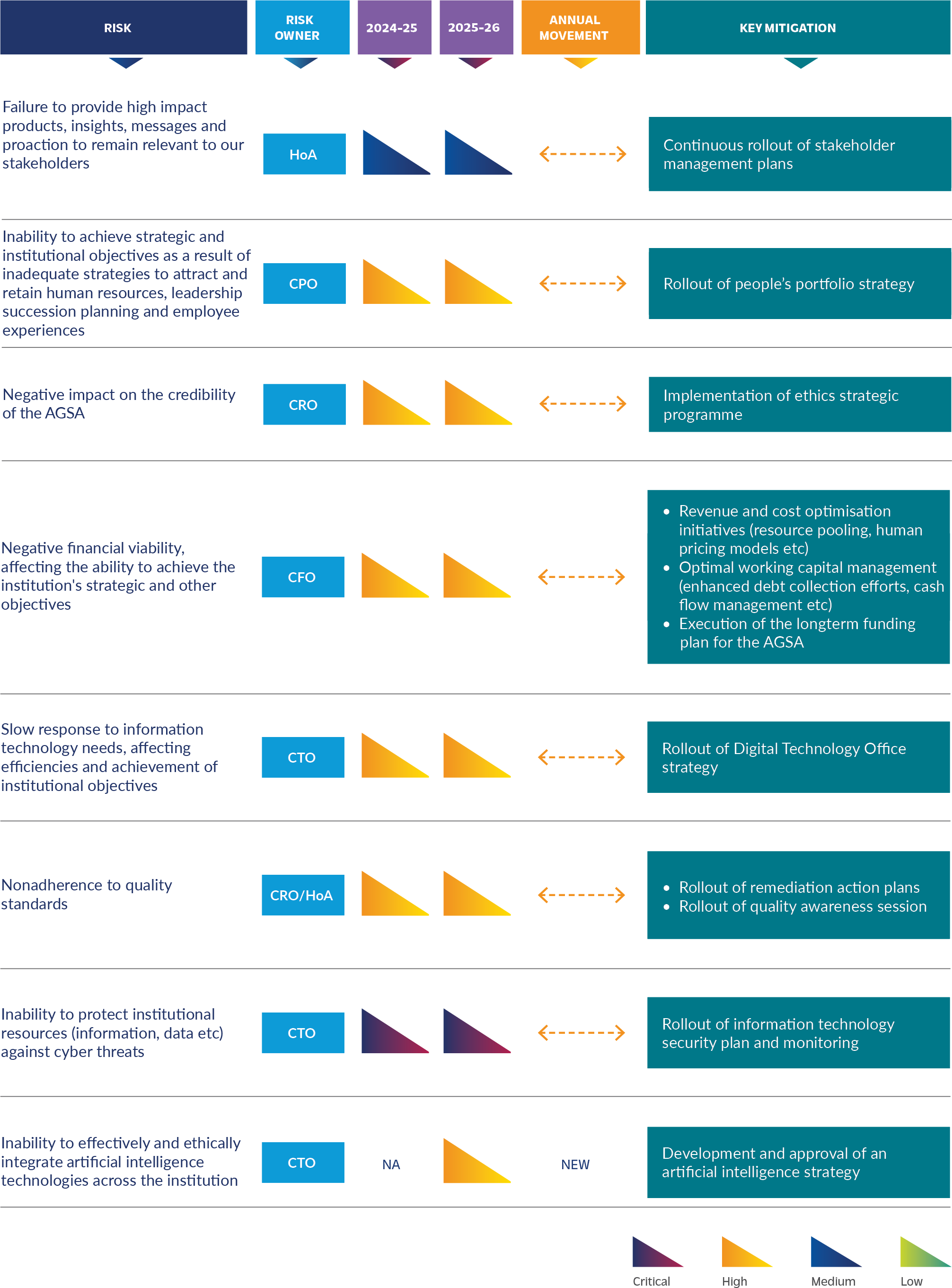
Risk management maturity level
Effective risk management safeguarded institutional resilience, audit quality and institutional credibility throughout the year. Strategic, project and operational risks were monitored through the strategic risk profile, the SoQM and ASP risk profiles, with oversight from established governance structures. Of the 56 planned actions, 49 were closed off by 31 March 2026. Mitigation of benefits realisation rollout was, however, not applied consistently across all processes.
Although risk exposure remained within approved tolerances, reported incidents such as harassment and project management highlighted the need for sustained management focus and consistent application of corrective actions, particularly in governance discipline, benefits realisation and workplace conduct.
System of quality management
AGSA’s SoQM remained central to maintaining audit quality, reinforcing audit opinion credibility and safeguarding reputation. The system monitors performance across all components, identifies and addresses deficiencies timeously and assesses whether corrective actions are benefitting the design and operating effectiveness of the control environment.
Remediation
Implementation of International ISQM1 is in its fourth year and continued its measurable progress, with remedial actions having reduced from an initial 106 to 32 by November 2025.
As more straightforward issues were resolved, management attention shifted to those more complex, which need coordinated implementation across the institution. These concentrate on meeting audit milestones, advancing planning and elevating timeliness and quality of reviews by managers.
Following quality management and audit committee approval in November 2025, the remaining 32 actions were rolled out on 5 December 2025. Monitoring is ongoing, with the leadership committee reinforcing accountability through dashboards and sign-off by process owners.
Early warning indicator system
The early warning indicator identifies and responds to emerging risks that may negatively affect the SoQM. Its objectives are:
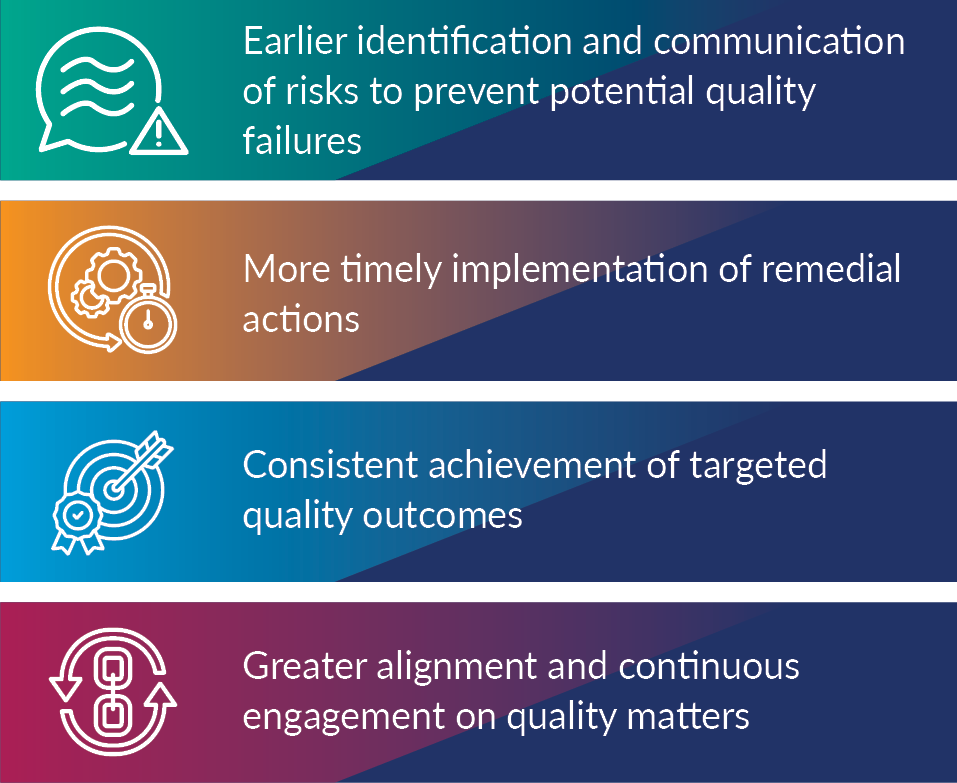
During the year, the SoQM team advanced the system, including identifying potential indicators. Consultation with internal stakeholders assessed availability of both structured and unstructured data to inform system design. This engagement will continue.
Quality engagement reviews
Post-cycle audit engagement reviews continued through the year, with 48 PFMA and 18 MFMA files selected. The former were fully reviewed and the second discussion sessions completed. MFMA reviews are underway, as file selection happened from 1 March 2026 following file closure at the end of February 2026. Overall, the post-cycle review process remains on track for completion by June 2026.
Ethics maturity level
We retained our AAA ethics maturity rating, reflecting a well-established ethical culture. The ethics maturity assessment survey attracted a 94% employee response rate, a 4% increase from the previous year and above the industry benchmark of 65%.
Ethics governance, disclosure discipline and leadership accountability continued to underpin audit independence and safeguard institutional credibility. High awareness and compliance made for proactive management of ethics risks.
Training remained a key enabler, with ethics training, awareness initiatives and business unit engagements reinforcing expected behaviours.
Complaints management
Complaints management was enhanced during the year to protect institutional reputation and maintain public confidence. The complaints centre received 140 complaints, 120 of which were deemed outside complaints policy scope. Of these, 48 were audit tipoffs and referred to the business units. At the reporting date, five in-scope complaints were progressing, including two under investigation and three at reporting stage.
Turnaround times improved and 42 of 47 cases were closed (89%) within the AGSA timelines. Insights from complaints were presented as learning inputs to promote prevention and awareness. Complaints-related risks remained within approved tolerances, with no material impact on audit credibility or institutional reputation.
Auditors joining auditees
Being a learning institution that develops talent for the public sector, the AGSA monitors the movement of auditors into auditees as a key independence and ethics risk. During 2025-26, 92 auditors transitioned into public sector institutions audited by the AGSA. Four were key audit members and measures were implemented to protect audit quality and independence. These included an automated declarations module and the enhancement of engagement letters to formalise cooperation with auditees. These interventions improved transparency and reduced the risk of non-disclosure.
Declaration processes further reinforced accountability for policy breaches. Non-declaration matters revealed during disciplinary and complaints processes highlighted the need for continued vigilance and were a deterrent against noncompliance.
Audit disputes
Since the introduction of the audit dispute resolution mechanism on 1 November 2022, 59 matters, comprising audit disputes and category 2 complaints (during the PFMA and MFMA audit cycles) have been escalated by auditees and, in some instances, by members of the public. Amid an otherwise gradual increase, there was a notable peak in 2025-26 of 27 cases.
The primary drivers of audit disputes include increased pushback from auditees seeking to avoid regressions and the need for procedural fairness. Category 2 complaints focused largely on audit team conduct, adherence to auditing standards and audit opinions. The most escalations were received during the MFMA 2024-25 audit cycle. Encouragingly, most disputes were resolved at the first level (tier 1), indicating mechanism effectiveness, albeit with internal efficiencies needing attention.
This avoided legal avenues to challenge audit outcomes.
Litigation
We achieved a 100% success rate across all matters concluded during the financial year, with all court deadlines met and no adverse cost orders incurred. This outcome demonstrates disciplined legal risk management, minimised financial exposure and effective execution of our litigation approach. The Chris Hani District Municipality matter, which will test the AGSA’s material irregularity findings, will be heard in October 2026.
The Road Accident Fund case was concluded. This case was important as it was holding public institutions to accounting standards set by the Accounting Standards Board. It also sent a clear message to other public bodies on the AGSA commitment to auditing without fear or favour and where the authority lies in determining accounting standards.
Conclusion
The year under review cemented the foundation for improved quality, accountability and operational maturity. In 2026-27, remediation will ensure timely implementation of agreed actions, embedding quality management messages to influence audit behaviour and stabilise outcomes. It will also enhance oversight through complaints management governance, risk and compliance systems. Litigation methodology and the corporate legal service operating model will be finalised.
Performance against 2025-26 targets
| Key performance indicator | 2025-26 target | Year-end actual | Status |
|---|---|---|---|
| 360-degree leadership rating/ leadership confidence indicator | Maintain baseline leadership rating | Average performance of 3,79 (baseline: 3,46) | |
| % of people tracking above benchmark against target leadership profile | 30% | 249 leaders of 401 scoring 3,7 and above = 62% | |
| AGSA culture index | 2,5% increase on 2024-25 rating | A 0,83% decline in the culture score to 3,59% | |
| Turnover of high-performing employees | < 5% | 4,86% | |
| Achievement of assessment of professional competence pass rate | 45% to 60% (*based on firsttime assessment of professional competence writers) | 51% | |
| Broad-based black economic empowerment level achieved | Level 1 | Level 1 |
The AGSA successfully maintained its broad-based black economic empowerment level 1 status for the seventh consecutive year, demonstrating a strong commitment to inclusive economic participation.
The institution has been certified a top employer for two consecutive years (2025 and 2026), testament to its commitment to creating a workplace where people thrive, grow and feel valued.
AGSA workforce profile
Institutional headcount
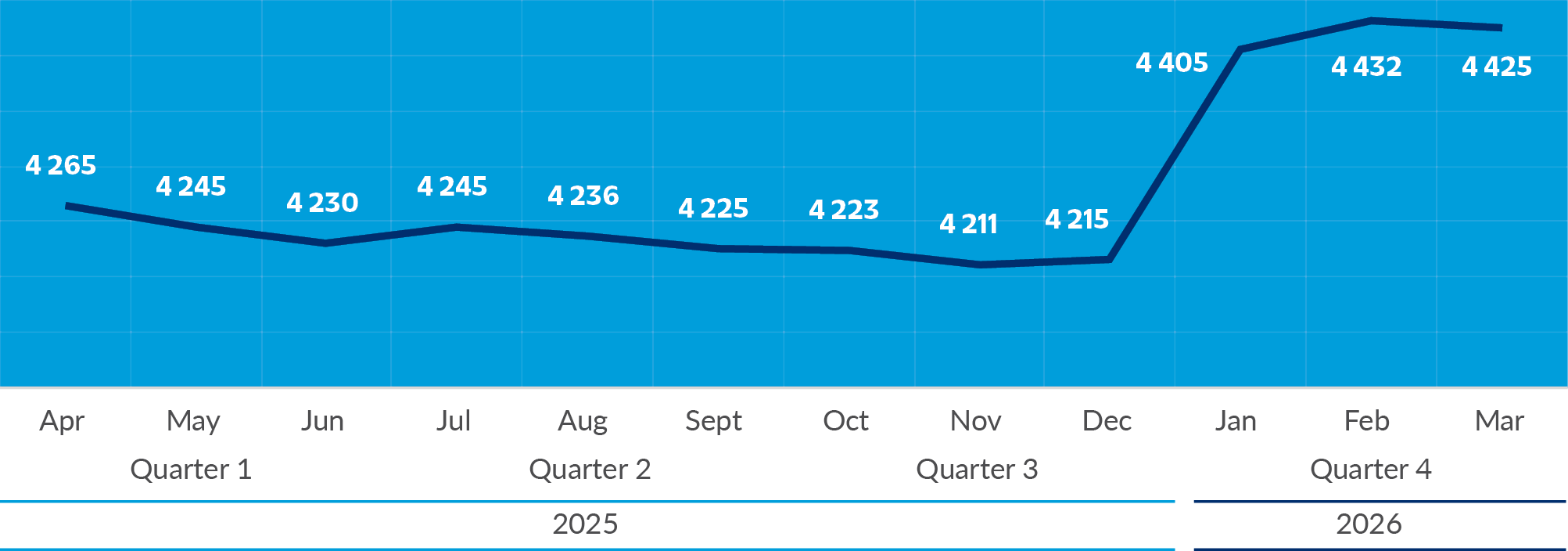
The institution ended the year with a headcount of 4 425 employees, compared with 4 240 at the end of 2024-25. Leadership made sure that the institution was capacitated to deliver on commitments, while controlling overhead costs.
Number of audit professionals
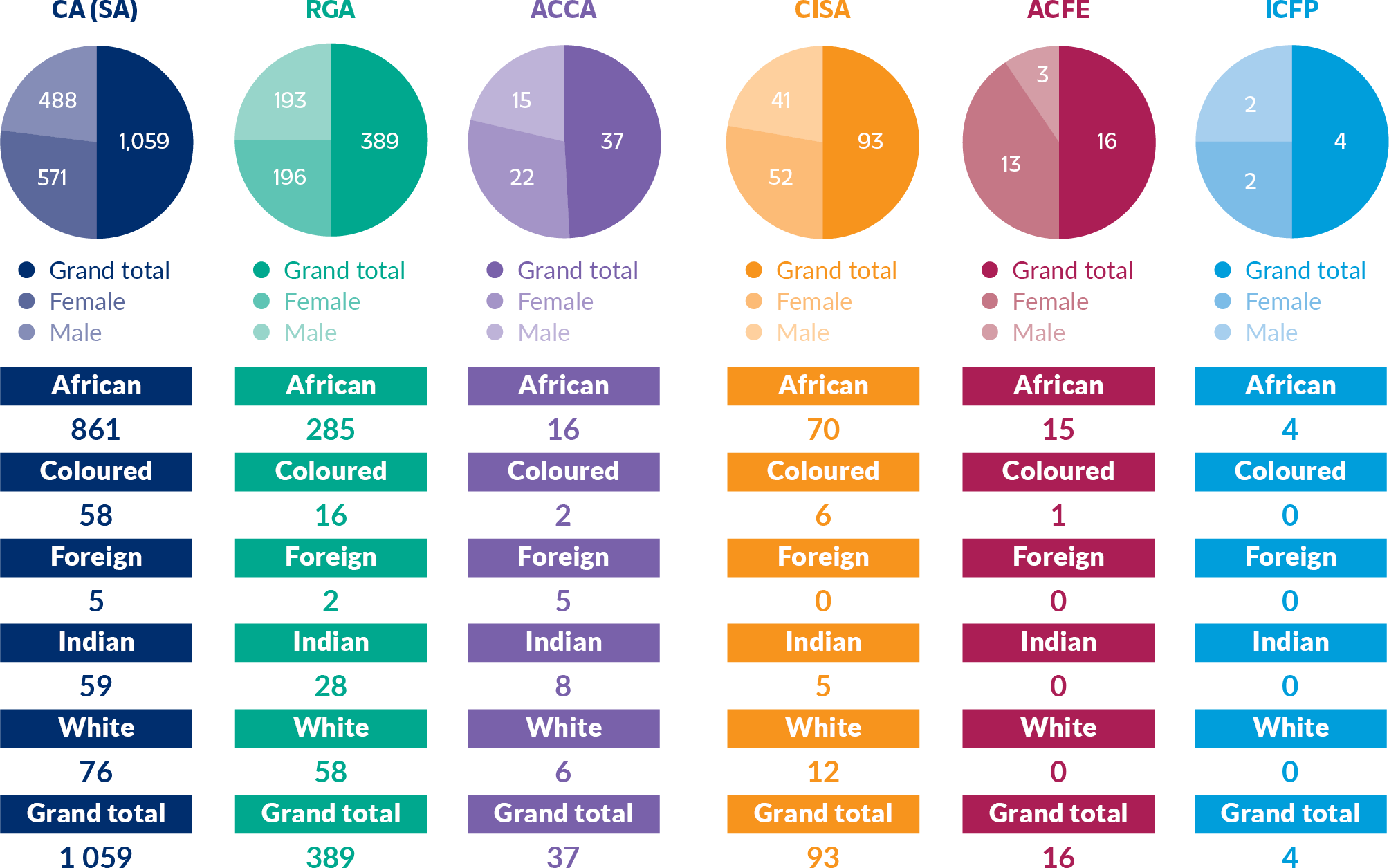
Total number of audit professionals
| CA (SA) | RGA | ACCA | CISA | ACFE | ICFP | Grand total | |
|---|---|---|---|---|---|---|---|
| Mar 2026 total | 1 392 | 389 | 37 | 93 | 16 | 4 | 1 931 |
| Mar 2025 total | 1 270 | 456 | 40 | 99 | 13 | 4 | 1 882 |
AGSA racial composition
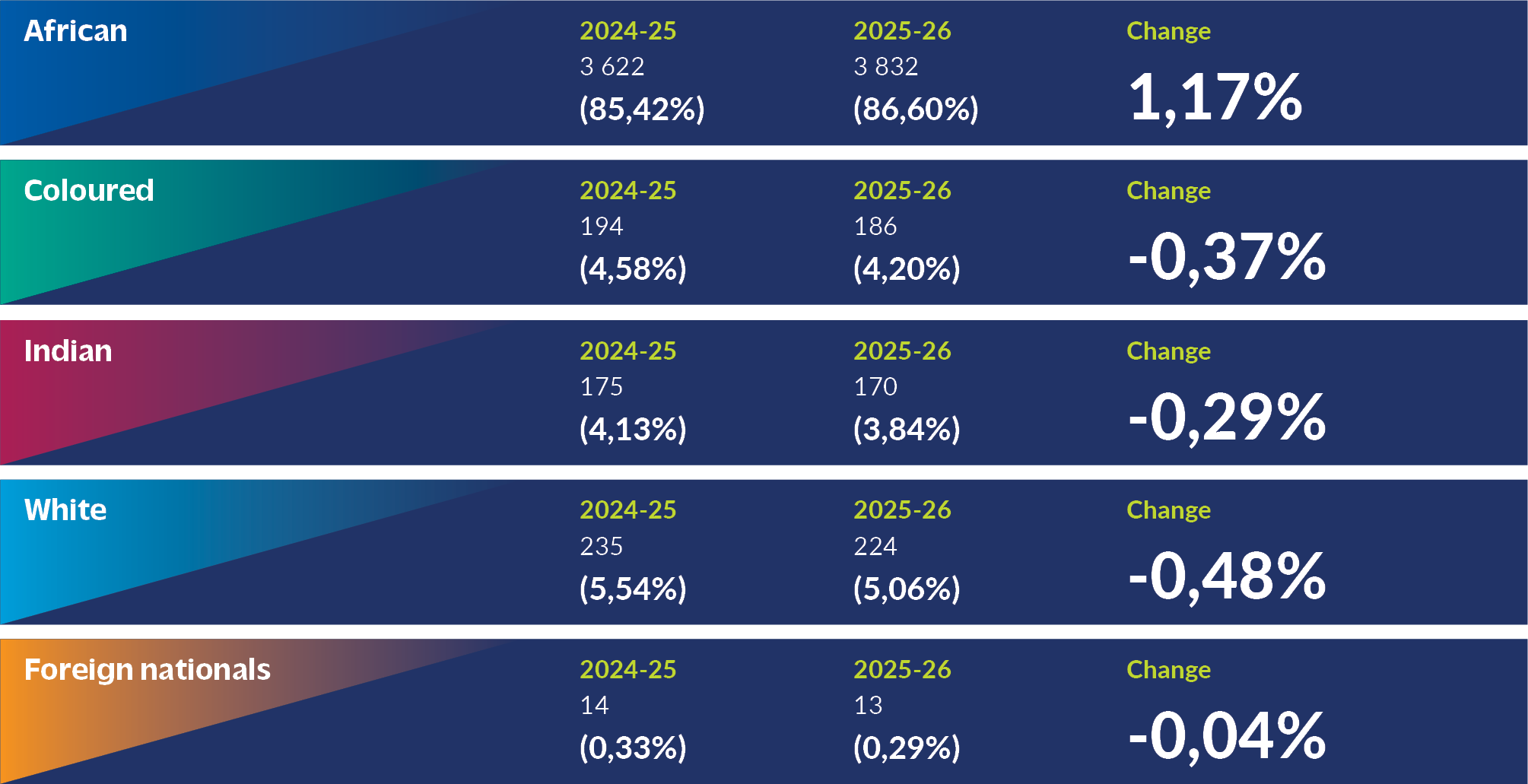
Employment equity representation among senior management rose, with designated groups and women again exceeding sector targets. However, representation of persons with disabilities stands at 1,3%, below the 3% target, while designatedgroup males are underrepresented across junior management. Interventions to close the gaps include cultural change initiatives, gender advocacy programmes and continued implementation of gender seal agreement commitments.
New sectoral targets are set to enhance representation among non-African designated groups, particularly at management levels where current representation already exceeds certain regulations. Regular reporting by the institution’s people team to line managers emphasises accountability for identified gaps and sustaining compliance. Monitoring underlined by a talent acquisition push and dashboard reporting will enable the institution to track progress against targets, identify emerging risks early and prevent regression.
Age generation composition
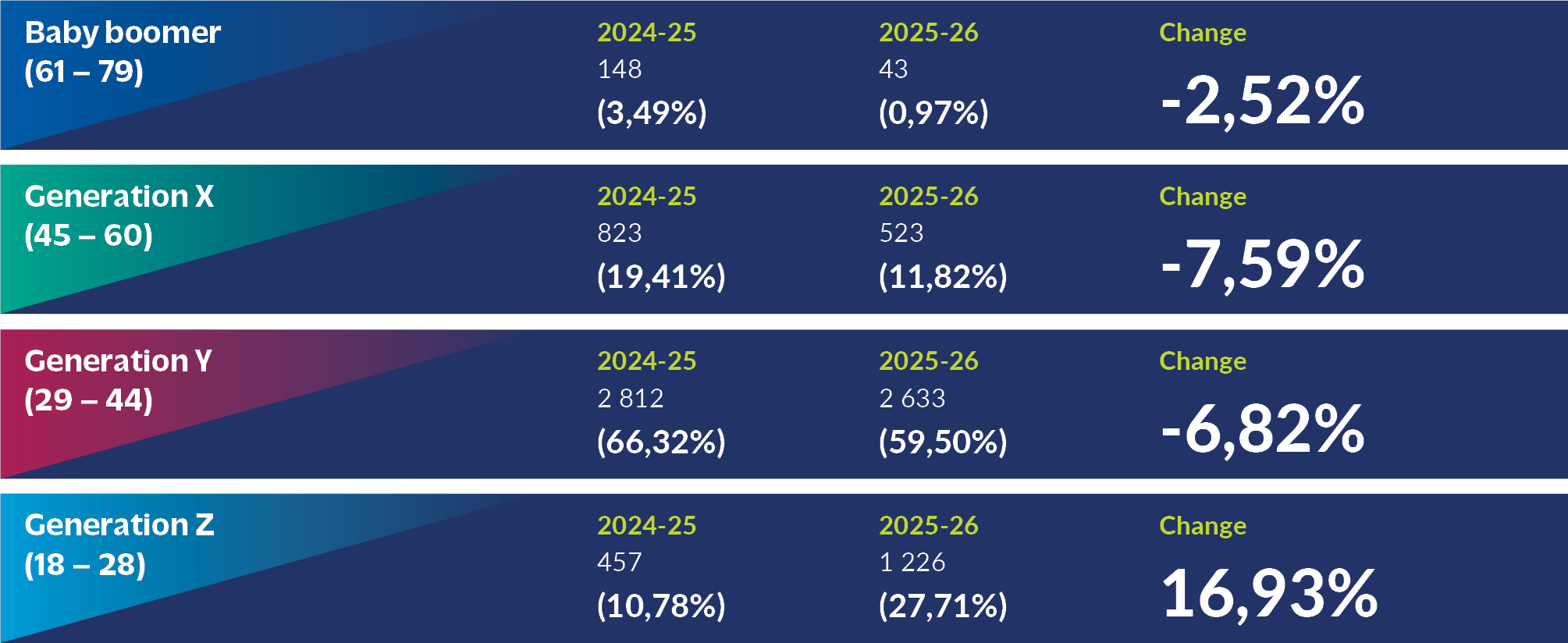
The AGSA’s workforce has become younger through the years, mirroring national demographic trends and protecting the talent pipeline. Nevertheless, male representation is below the national economically active population figure, which calls for balanced, targeted workforce planning.
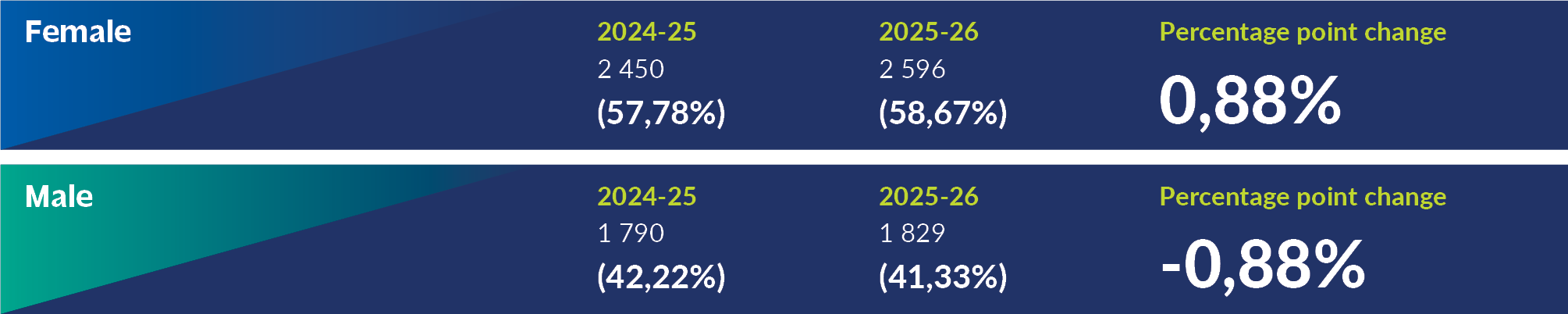
Gender composition
The AGSA as a responsible corporate citizen: our transformation contributions
Young professionals programme
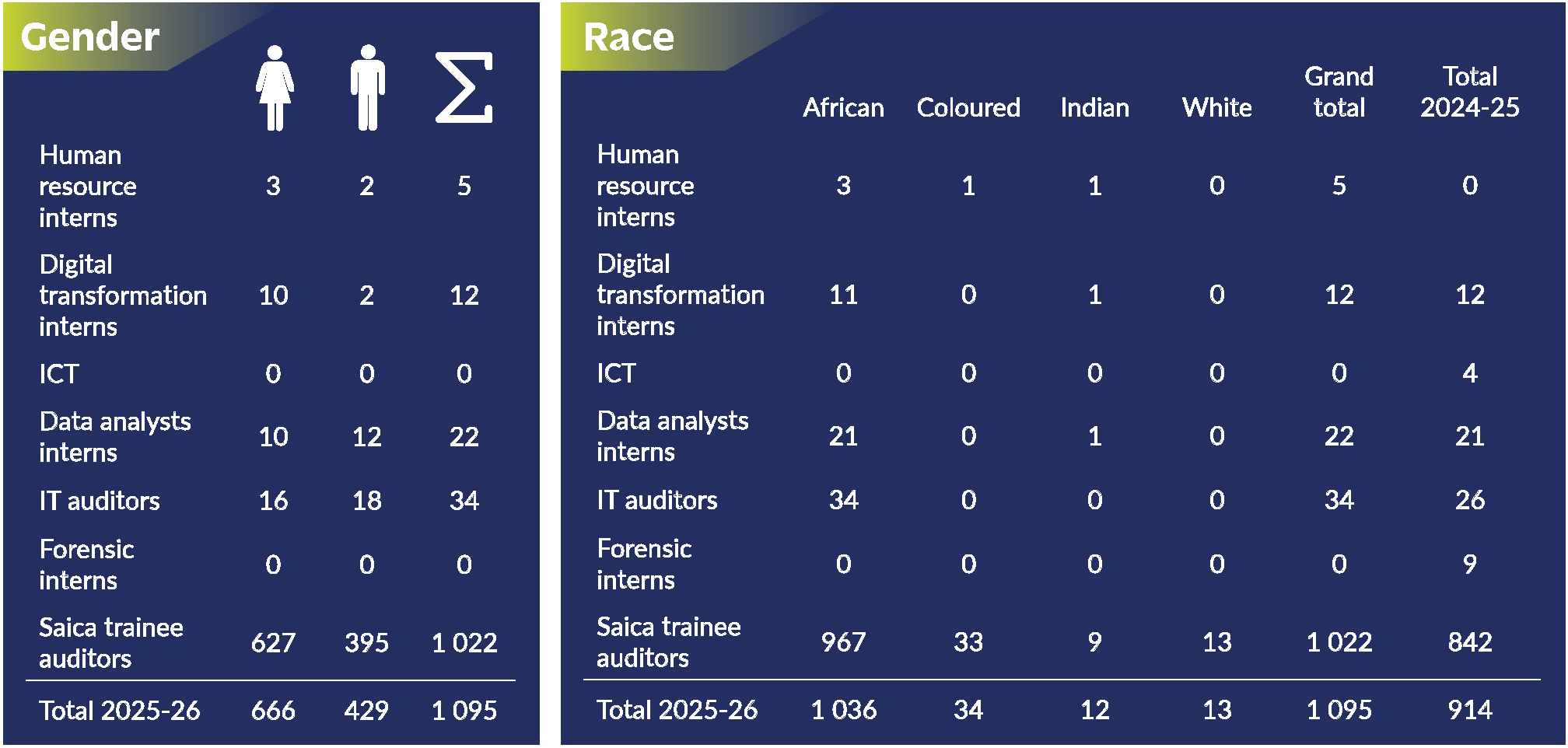
The AGSA young professionals programmes seek to develop future-ready professionals for the institution and the auditing and accounting profession. The number of young professionals increased from 914 in 2024-25 to 1 095 in 2025-26 (181 individuals or 19,8%). This can be attributed to continued investment.
Number of young professionals
Saica trainees qualification analysis
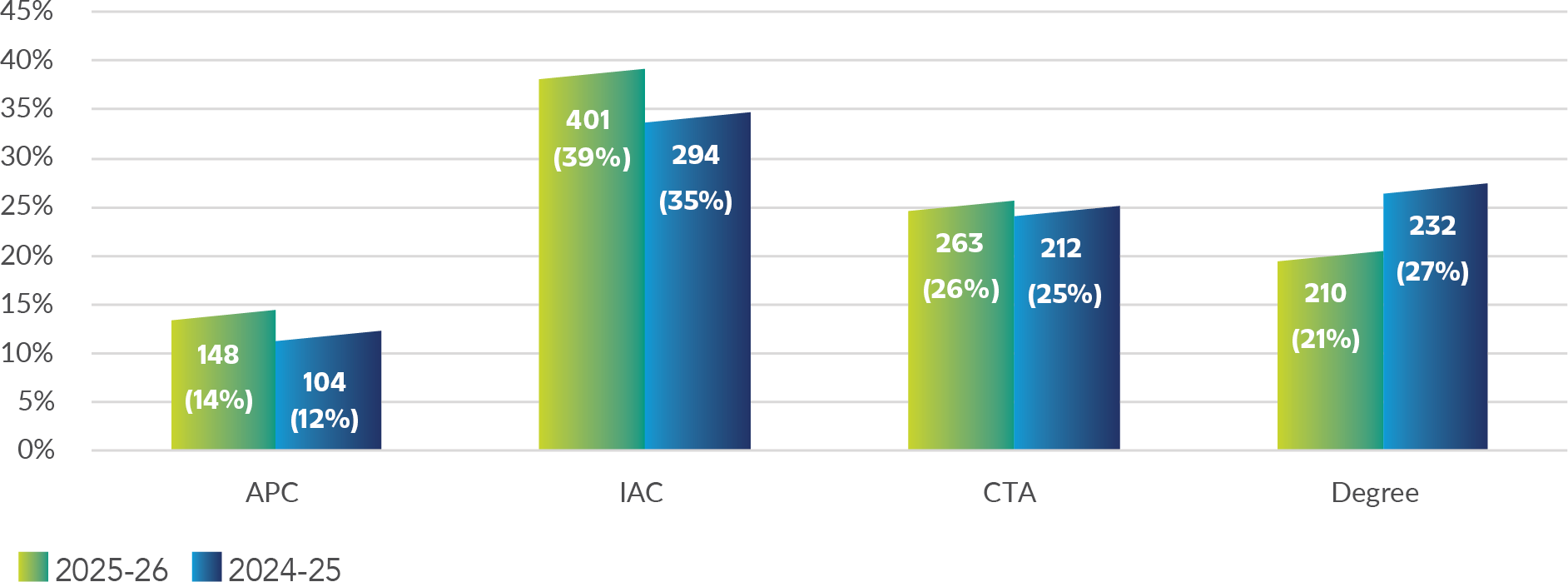
The young professional profile is shifting from degree-only entrants to candidates with postgraduate diplomas in accountancy.
Postgraduate support
During 2025-26, the AGSA implemented a postgraduate diploma in accountancy programme for 50 candidates with University of Johannesburg and the Finance and Accounting Sector Education and Training Authority. Thirty candidates successfully completed the programme – a 60% pass rate.
Initial assessment of competence
A total of 176 AGSA candidates passed – a rate of 51%, consistent with the January 2025 outcome (51%). This performance was sustained despite a decline in national results, with the South African Institute of Chartered Accountants’ pass rate decreasing by 5% and the African candidate pass rate declining by 7% over the same period. AGSA candidates, therefore, demonstrated stable yearon- year performance, highlighting the effectiveness and resilience of the institution’s academic interventions. Notably, newly recruited candidates achieved a rate of 65%. Among the 176 individuals are 26 from the postgraduate diploma programme.
Assessment of professional competence
From May to December 2025, the AGSA implemented an integrated, multilayered programme to boost technical competence, research capability and the strategic thinking required to succeed in a competency-based assessment environment. This was accompanied by targeted wellness activities for holistic support.
Of AGSA candidates who sat for the December 2025 assessment of professional competence, 191 qualified as chartered accountants [CA(SA)]. First-time candidates achieved a 51% pass rate. This increased the AGSA cumulative contribution to the professionalisation of auditing and accounting to 2 497 CA(SA)s. In addition, 103 young professionals have completed the competence assessment and are awaiting articles sign-off, which will push the AGSA’s contribution to around 2 600 CA(SA)s.
Graduate recruitment, bursaries and professional pipeline development
The AGSA graduate recruitment and bursary programmes remain strategic enablers of #cultureshift2030. During the reporting period, we advanced our role as a talent incubator, attracting significant graduate interest in an increasingly competitive talent market. We secured a sizeable share of CTA graduates, of benefit to our sustainability and the profession’s effective public sector governance.
We will expand early-stage interventions, deepen partnerships with academic institutions and further integrate professional development initiatives. These efforts will demonstrate the AGSA’s leadership in developing ethical, capable and future-ready accounting professionals.
Secondment of AGSA trainees and international exposure
In 2025, through its strong international partnerships, the AGSA signed a memorandum of understanding and formal agreement with the United Kingdom National Audit Office to facilitate two rounds of assistant manager secondments. The secondment programme will run from 2026 to December 2027.
This initiative aims to strengthen international collaboration, enhance the professional skills and exposure of our young professionals and promote the exchange of knowledge and best practices between the two institutions. The programme provides participants with valuable opportunities for cross-learning, while fostering stronger professional networks and supporting continuous institutional improvement in both countries.
Broad-based black economic empowerment contribution
The institution maintained its broad-based black economic empowerment level 1 status for the seventh consecutive year, progressing beyond regulatory compliance to longlasting sector transformation. This achievement was underpinned by a R2 million investment in socioeconomic development, optimum use of the skills development levy and a preferential procurement strategy that prioritises black-owned and small enterprises for stronger supply chain resilience and broader sector participation. Our commitment to transformation translates into tangible impacts in our communities through corporate social investment activities.
AGSA culture index
In 2025-26, 100% of leader-led feedback on the culture dipstick was completed across both audit (including audit support) and non-audit portfolios. Feedback from all business units was submitted on time, marking a milestone in the culture journey. This ensured that unit wellness and culture action plans were well informed and could be launched timeously.
Unfortunately, the institution missed its targeted culture index score. Having targeted a 2,5% increase on its 3,62 score of 2024-25, it instead saw a 0, 83% decline, from 3,62 to 3,59. To ensure that this is corrected going forward, a thorough analysis will be conducted in the coming year. The AGSA realises that its people are the key to delivering on its mandate. Therefore, recruitment of highly skilled people must be balanced by retention that includes a healthy and conducive work environment and culture. Consequently, this shortcoming will receive the utmost attention.
AGSA leadership DNA
In line with #cultureshift2030, leadership development was repositioned from standalone training interventions to an integrated leadership capability platform promoting ethical conduct, accountability and performance across leadership.
Leadership capability is anchored in the AGSA leadership DNA, which provides a shared behavioural framework and common leadership language. Learning delivery was sequenced around audit and legislative cycles, which shows increased institutional maturity, effective prioritisation and prudent resource use, while broadening leadership capability to ensure audit quality and longterm sustainability. This focus will continue into 2026-27, with a review of personal development plans to identify priority interventions aligned to dimensions needing further development, as cited in the leadership DNA survey. These include leading with heart, creating safe spaces and disrupting for sustainability.
All leadership DNA learning pathways were developed and rolled out to 100% of executives and senior managers. Learning pathways were further refined in September 2025 to accommodate culture shift interventions. Survey results for 2025 indicate an upward trend compared to 2024, demonstrating positive traction and adoption of leadership initiatives. Through the AGSA academy, eight of the 11 planned behavioural learning and leadership programmes (73%) were launched.
Women leading in the public sector programme
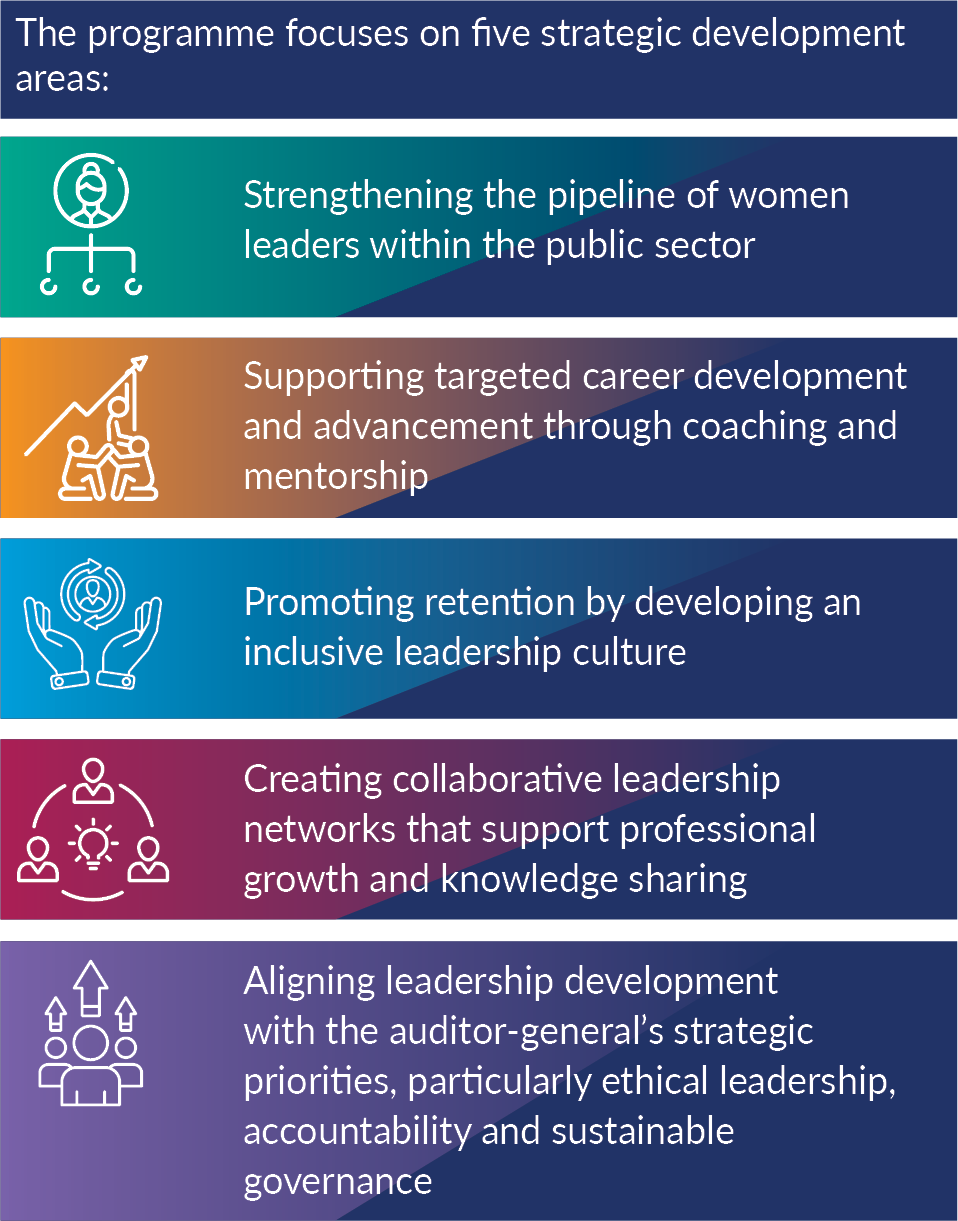
The AGSA’s women leading in the public sector programme is a flagship leadership development initiative aimed at empowering 500 women leaders across the South African public sector by the end of 2027. The programme seeks to strengthen the pipeline of senior women leaders by equipping participants with the advanced leadership capabilities, professional networks, coaching support and governance skills required to drive ethical and sustainable public sector leadership.
By 31 March 2026, we achieved significant progress in establishing the programme and onboarding participants. Strategic partnerships were formalised with the Financial and Accounting Sector Education and Training Authority, Duke and the African Women Chartered Accountants.
The AGSA had 45 participants enrolled in the programme.
Retention of high-performing employees
We retained 95,14% of high-performing employees during 2025-26 through retention and talent management strategies. During the year, 19% of high-potential employees (48 of 247) progressed into new or expanded roles in the institution. In this way, the institution converted retention into meaningful career growth and leadership development.'
Employee wellbeing and safety: Threats and intimidation
The personal safety of employees remains paramount. AGSA auditors are, at times, exposed to threats and intimidation, particularly in environments where audit outcomes, including identification of material irregularities or fraud, may trigger resistance or backlash. The institution maintains a firm stance against any form of intimidation of its employees. Proactive risk assessments, training and criteria to identify high-risk environments have been introduced to mitigate risk and ensure employee safety. Close collaboration between security services and the People function, particularly through the employee wellness programme, has proven valuable in managing incidents and supporting affected employees.
Ongoing work with the Risk and Security function has strengthened field safety protocols and includes security training and clearer reporting mechanisms to ensure that employees can respond to potential threats. Continuous engagement with law enforcement and safety agencies has facilitated timely and effective responses. The institution’s threats and intimidation handling score increased from 80% in the previous year below the target of 85% to 87% in 2025-26.
Change management
The change leadership programme was launched across multiple audit business units, equipping leaders to guide teams through new ways of working. The programme covers change leadership behaviours and mindsets against a backdrop of reflection and action planning. All survey respondents rated the sessions excellent or good. Beyond building individual capability, valuable insights emerged into the institution’s readiness for change, informing ongoing change management and adoption strategies.
Conclusion
The institution made meaningful progress in building capacity, advancing transformation, developing future-ready talent and promoting employee wellbeing. While gaps remain in representation, continued investment will create a more inclusive, capable and sustainable workforce.