
How we are organised
How we are organised The AGSA is a South African constitutional institution that delivers services aimed at benefitting the country’s citizens. Its core functions include enabling good governance and accountability within the public sector, advancing best practice in public auditing and operating a supreme audit institution. By implication, the work we do benefits the global community. The institution maintains its head office in Pretoria, supported by regional offices in each of South Africa’s nine provinces. This geographic footprint enhances accessibility for auditees and other stakeholders, while simultaneously enabling efficient and effective delivery of services across the country.
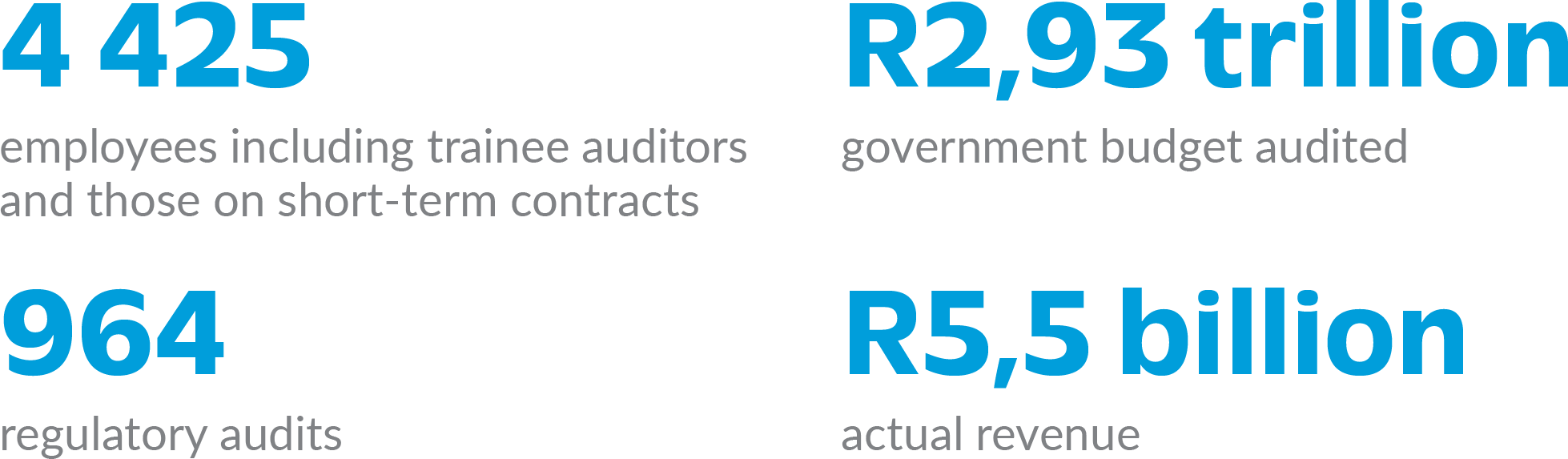
At 31 March 2026
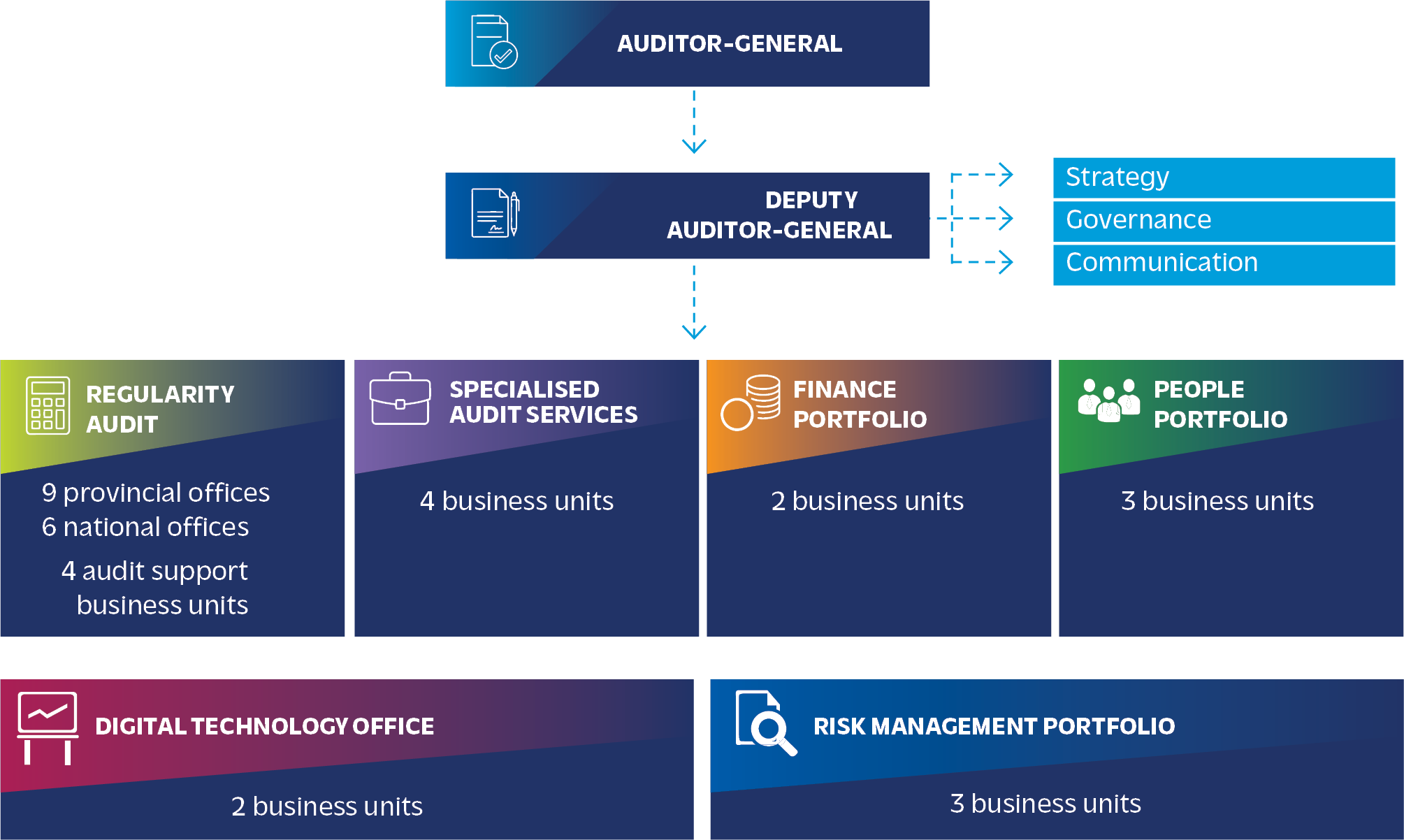
Structure of the AGSA
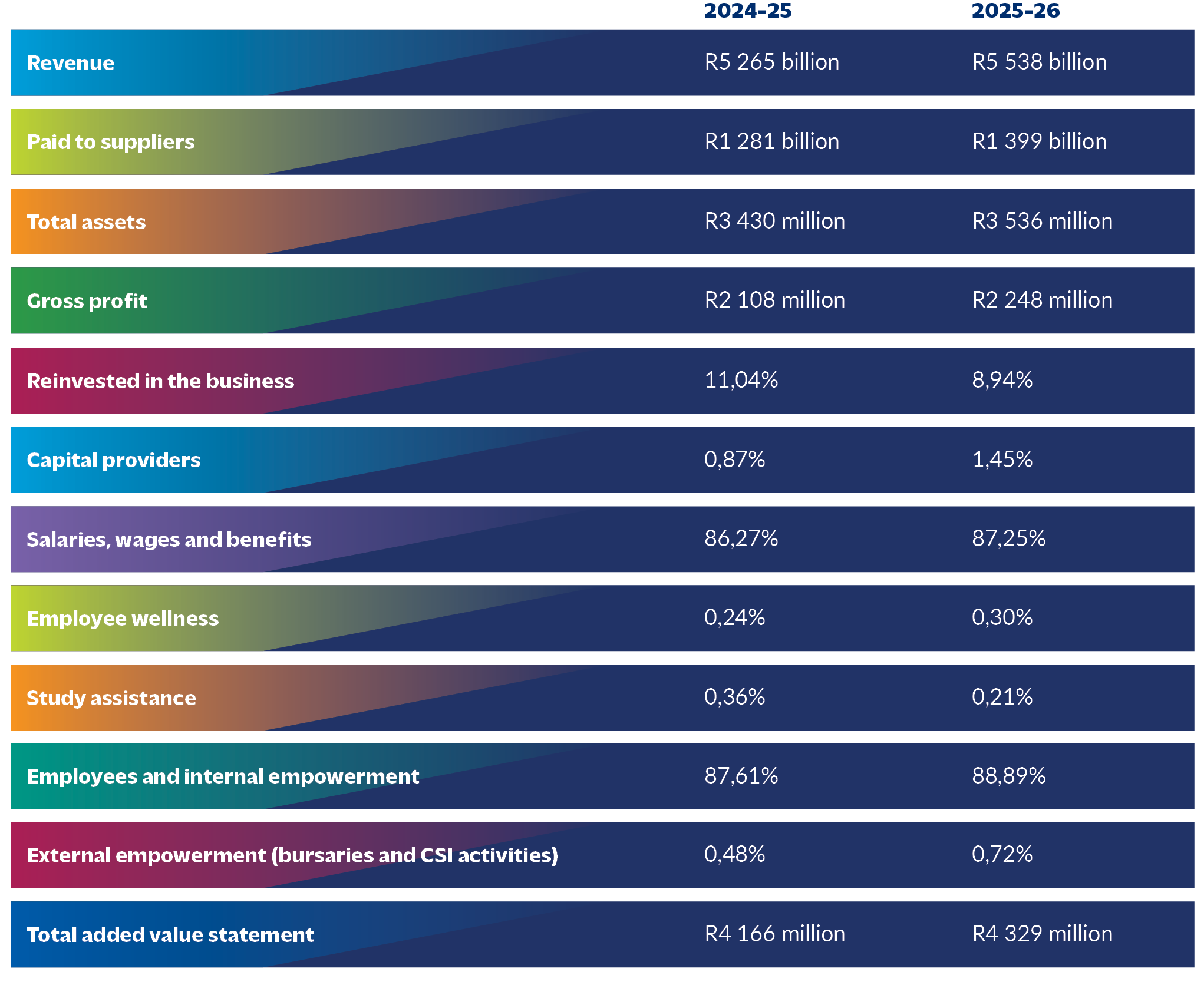
Value-added statement
Audit contracts awarded
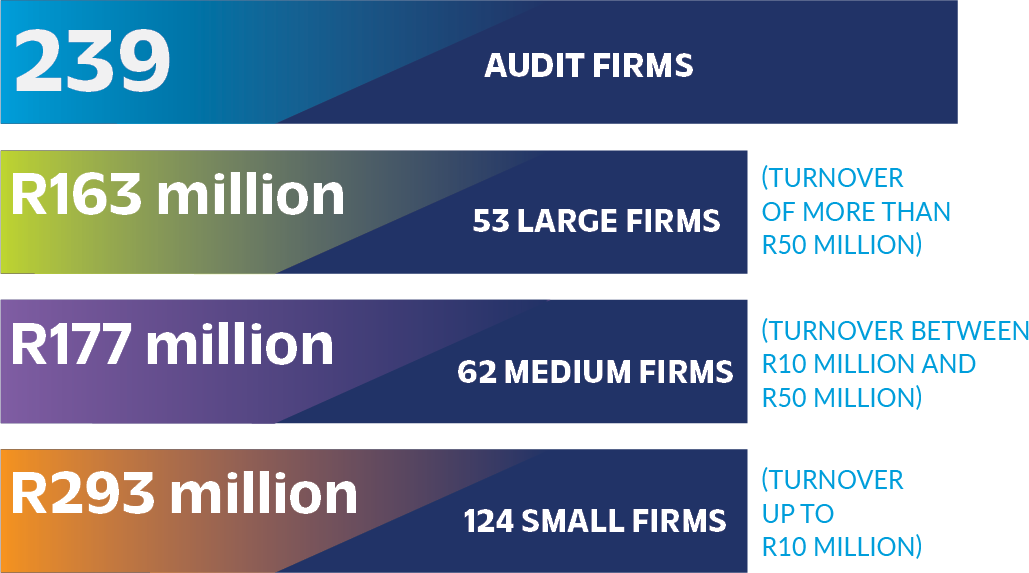
As part of its business model, the institution strategically outsources a portion of its audit work to supplement internal capacity. Firms engaged to perform audit work on behalf of the institution are referred to as contract work creditors. The selection of outsourced partners reflects both the institution’s capacity-building objectives and its commitment to transformation. All appointments are made through a transparent and robust selection process, with due consideration given to firm size, geographic footprint, technical capability and the quality of audit work delivered. Outsourced services typically include pre-issuance and quality reviews, procurement and supply chain audits, information systems audits and the provision of specialised expertise to support regulatory and performance audit functions.
Partnerships with small- to medium-sized audit firms are prioritised, supporting the development, growth, and advancement of black chartered accountants. Through this approach, these firms are enabled to access opportunities within the mainstream economy, accelerate their growth trajectories and contribute meaningfully to the sustainability of black- and women-owned audit firms, thereby advancing transformation within the auditing profession.
In addition, large audit firms are engaged where required to complement internal capacity. These allocations provide access to specialised skills, technical expertise and experienced audit professionals, ensuring the effective delivery of the institution’s mandate.
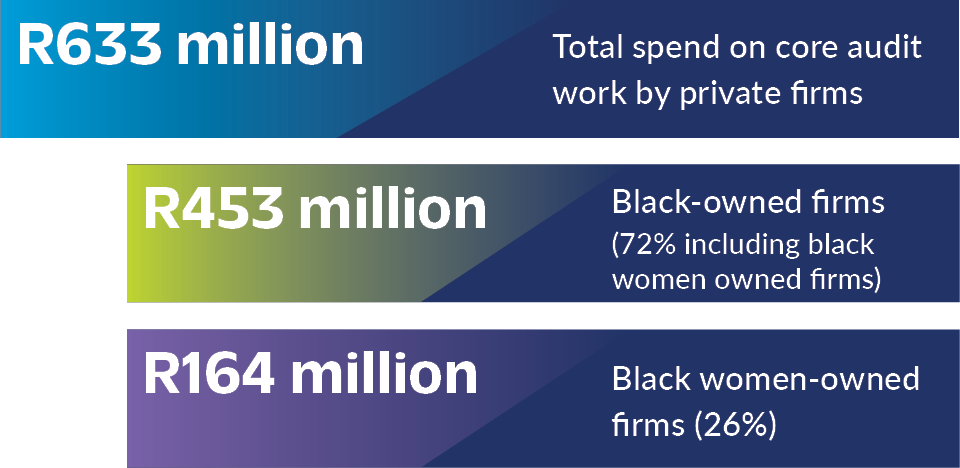
Contract work creditors – the numbers
Totals spend on core audit work by private firms
Total number of firms
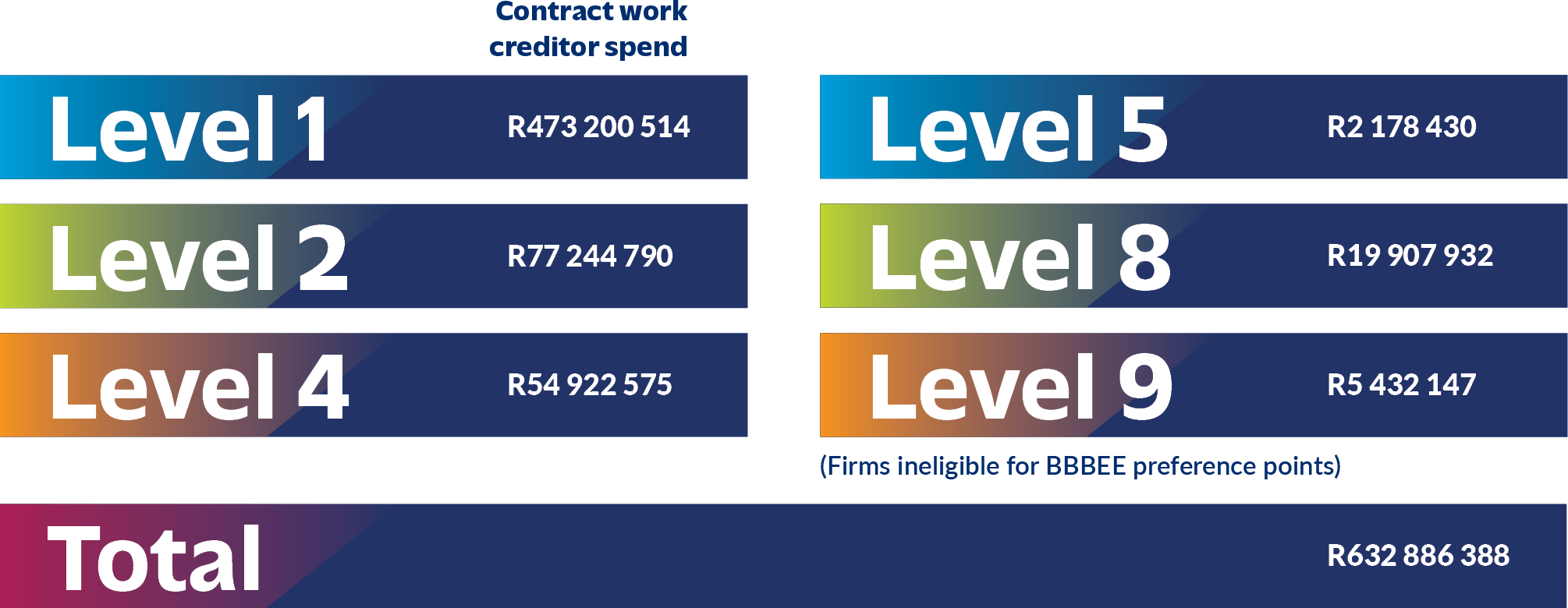
Broad-based black economic empowerment level 1
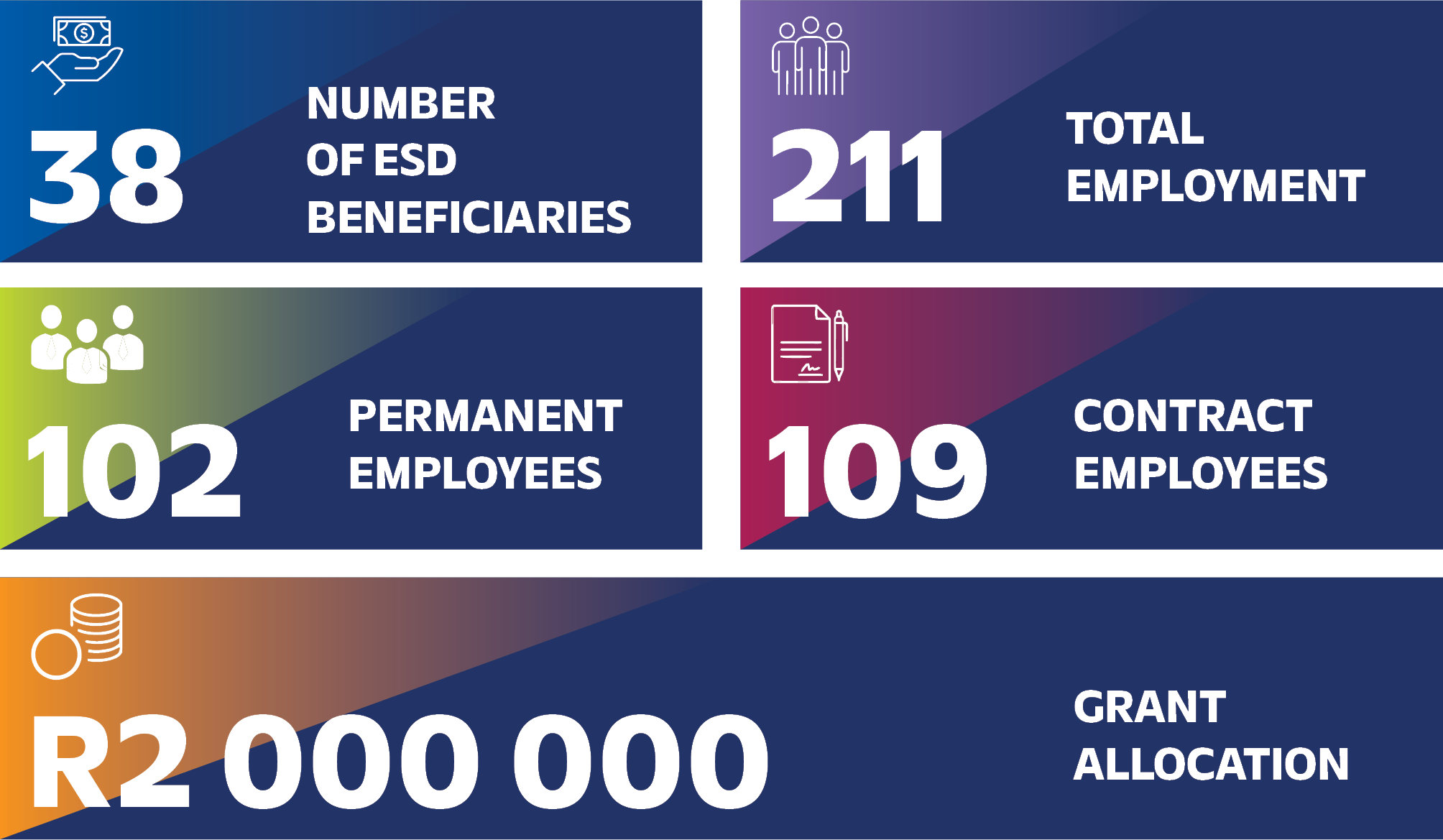
In 2025-26, the institution continued to advance its enterprise and supplier development (ESD) agenda as a core pillar of its transformation and sustainability priorities. Key initiatives including the expansion of the ESD panel, the provision of structured grant support and the increased allocation of audit work to blackand women-owned firms have strengthened sector capacity while maintaining audit quality and delivery standards. The programme continues to deliver tangible socioeconomic value, including job creation and enhanced supplier sustainability, reinforcing the AGSA’s role as a responsible public institution and a leader within the profession.
The ESD programme is designed to accelerate the growth and sustainability of small- to medium-sized, black-owned enterprises within the accounting and auditing sector. Since its inception, the programme has grown significantly, expanding from four beneficiaries in 2014 to 38 beneficiaries across all nine provinces by 2026. These beneficiaries are supported through a comprehensive and integrated model, including financial assistance, prioritised payments and the allocation of quality audit work key enablers of the programme’s success. In addition to expanding participation, the programme continues to contribute to job creation, supporting broader national efforts to address unemployment.
As part of its commitment to building a sustainable and transformed auditing profession, the ESD programme also focused on strengthening firm capability by requiring ESD firms to fully implement ISQM requirements, develop South African Institute of Chartered Accountants (Saica) accredited training offices, and the achieve Independent Regulatory Board for Auditors registration to enhance quality management and professional capacity across participating firms.
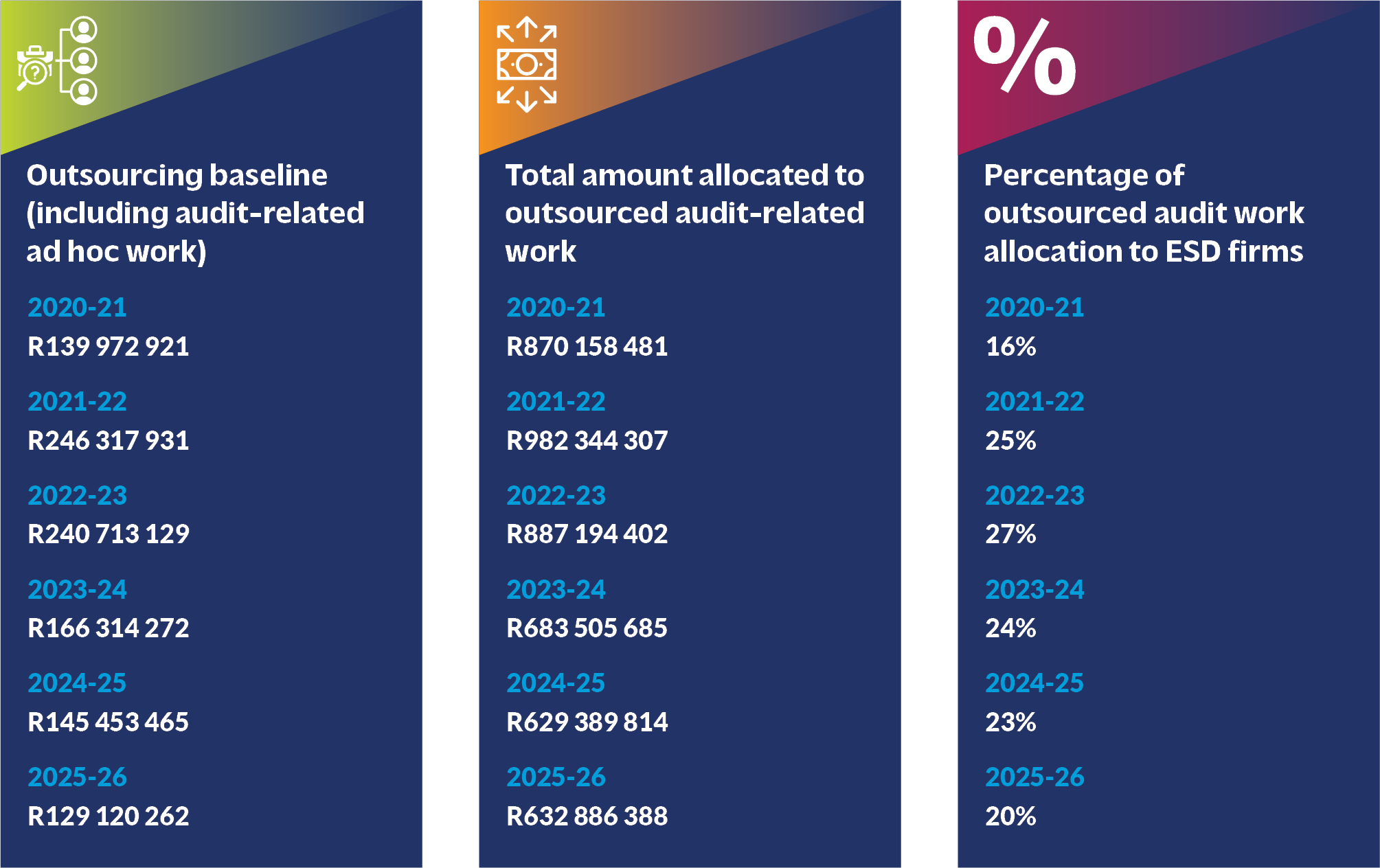
During the 2025-26 financial year, R129 million in contract work creditor assignments was allocated to ESD firms, enabling revenue generation while providing valuable training and development opportunities. In addition, R2 million was invested in ESD grants (2024-25: R1,9 million) to further strengthen the growth and sustainability of participating enterprises.
Outsourced audit work
Achieving a broad-based black economic empowerment level 1 for seven consecutive years illustrates the success of our ESD and other transformation initiatives.
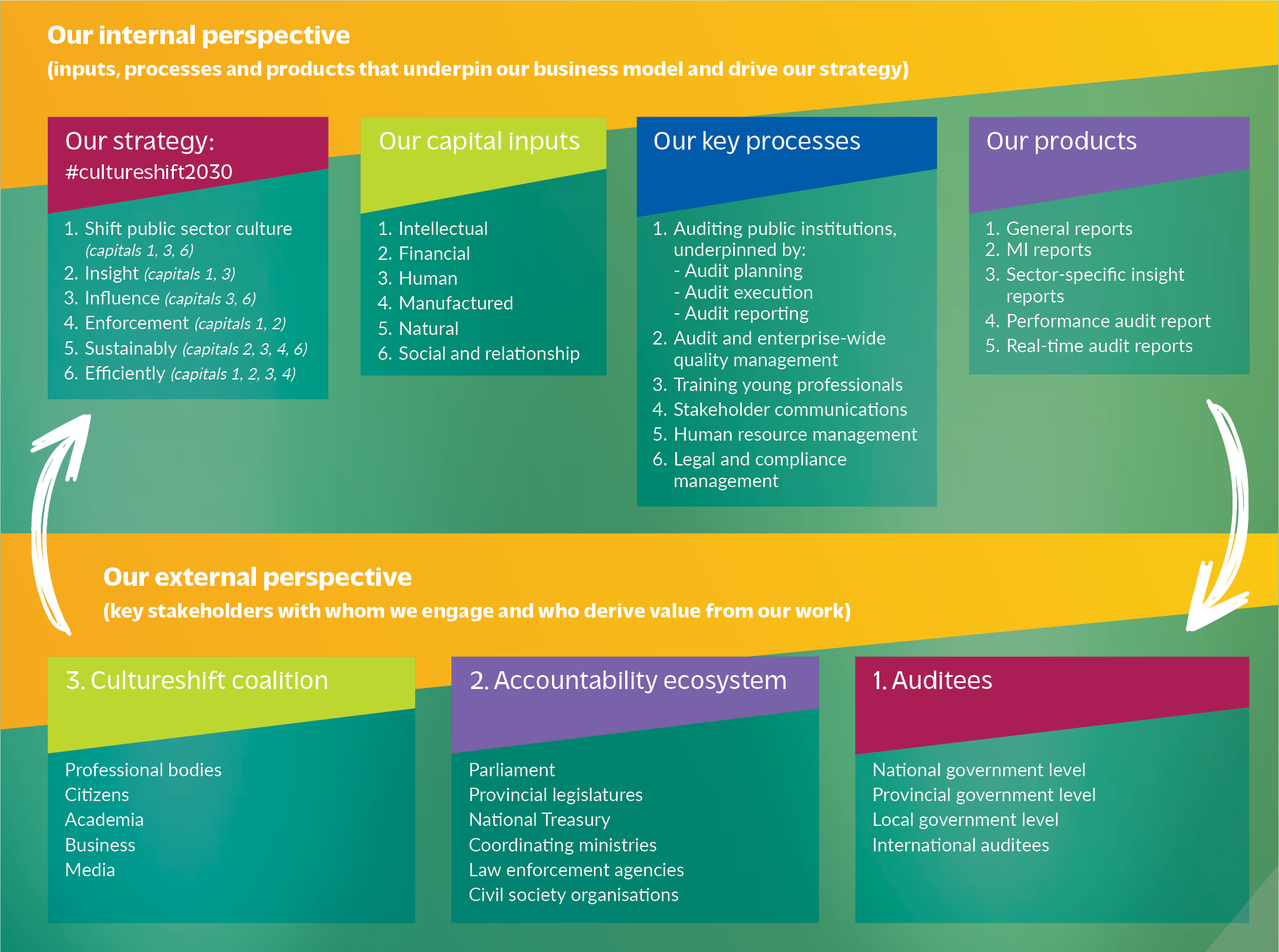
In aligning its business model to the creation of stakeholder value, the institution uses its inputs (capitals) and transforms them through its internal business processes to produce products that generate value for both the institution and its stakeholders.
The value-creation model illustrates how the AGSA creates stakeholder value through its strategy, products and the internal systems and processes that support them.
The model outlines the following:
- The institution’s strategic goals, as defined in the #cultureshift2030 strategy
- Its capitals and how these are leveraged to support each strategic goal
- Its internal configuration, including how the institution is structured from a people, processes and systems perspective to deliver on its key products
- Its key products
- The stakeholders who use these products.
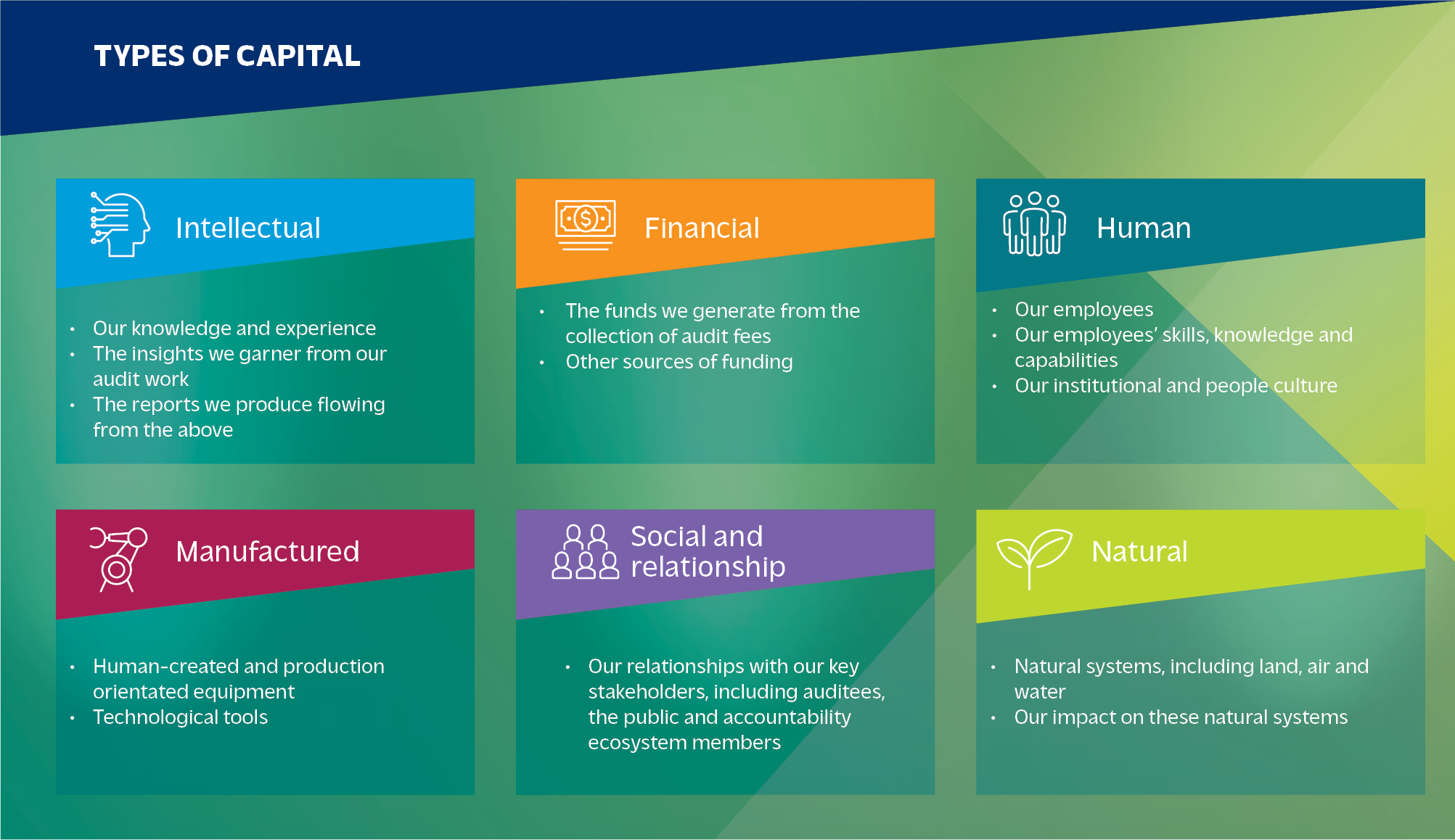
Our capitals
The six capitals represent the resources used by the institution to fulfil its mandate and are integral to its operational and strategic success. The availability, quality and affordability of these capitals may affect the institution’s longterm sustainability and its ability to create value for both the institution and its stakeholders.
Below is an outline of how our strategy links to our capitals, internal configuration and our business model in a manner that allows us to ultimately meet our operational priorities, deliver on our strategy and create value for both the institution internally and all our external stakeholders.
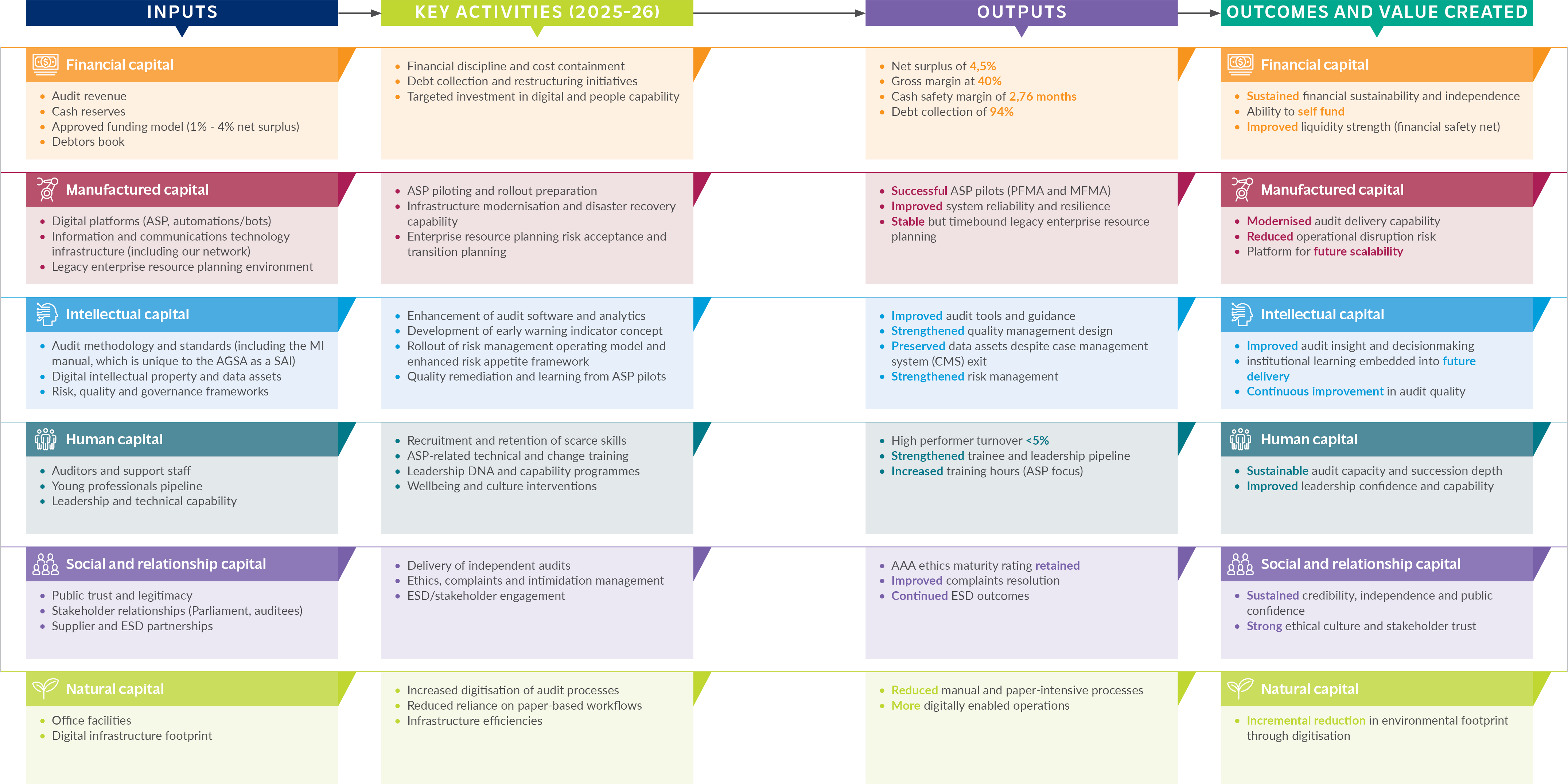
Below is an outline of our capitals and how they link to our key outputs and value-creating outcomes. The mapping depicts the relationship among our capital deployment, the resulting outputs and the overall outcomes and value created through all of these. It also supports our key stakeholders in understanding how our inputs and outputs create stakeholder value and why it’s important for us to manage risks, as these threaten our outcomes and value creation.
Value of our audit work

International value
As South Africa’s supreme audit institution, we subscribe to and apply the principles entrenched in Intosai-P12, The value and benefits of supreme audit institutions - making a difference to the lives of citizens. The overall philosophy of the standard centres around the following notion:
Auditing of government and public sector entities by SAIs has a positive impact on trust in society because it focuses the minds of the custodians of public resources on how well they use those resources. Such awareness supports desirable values and underpins accountability mechanisms, which in turn leads to improved decisions. Once a SAI’s audit results have been made public, citizens are able to hold the custodians of public resources accountable. In this way SAIs promote the efficiency, accountability, effectiveness and transparency of public administration. An independent, effective and credible SAI is therefore an essential component in a democratic system where accountability, transparency and integrity are indispensable parts of a stable democracy. Acting in the public interest places a further responsibility on SAIs to demonstrate their ongoing relevance to citizens, Parliament and other stakeholders.
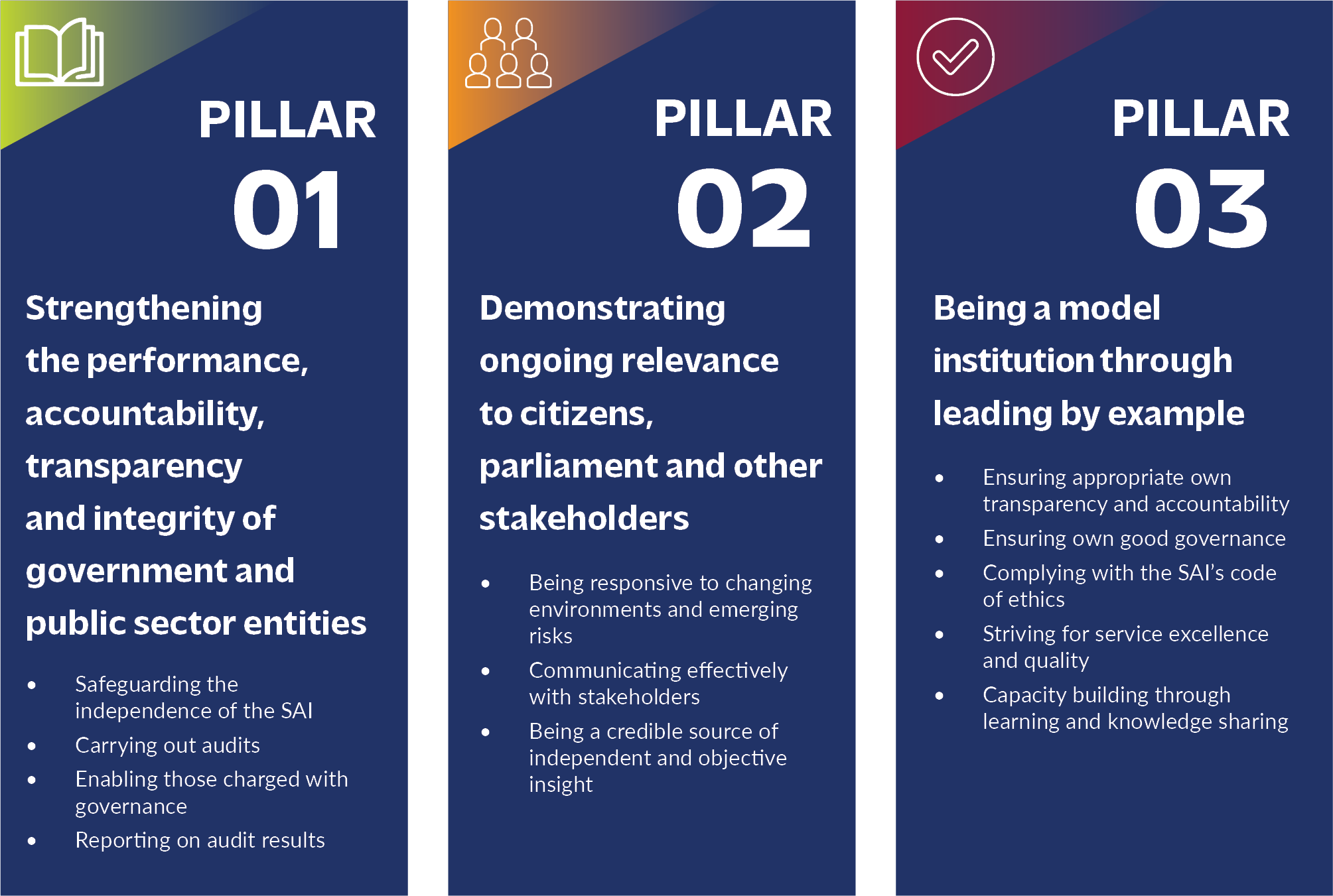
According to Intosai-P12, the extent to which a SAI can make a difference to the lives of citizens is contingent on three main pillars: