
Our strategy: #cultureshift2030
The strategic aspiration
Through the #cultureshift2030 strategy, the institution seeks to drive a stronger, more direct and consistent impact on the lived realities of South Africans. This impact is reflected in the advancement of a public sector culture characterised by performance, accountability, transparency and integrity. This extends beyond mere compliance with rules to fostering a deeper understanding and consistent achievement of the outcomes for which those rules exist.
The institution’s strategic aspiration is grounded in section 195 of the Constitution of the Republic of South Africa, which establishes the democratic values and principles governing public administration. Accordingly, the public service is expected to embody the following principles:
- A high standard of professional ethics must be promoted and maintained
- Efficient, economic and effective use of resources must be ensured
- Public administration must be development-oriented
- Services must be provided impartially, fairly, equitably and without bias
- People’s needs must be responded to and the public must be encouraged to participate in policymaking
- Public administration must be accountable
- Transparency must be fostered through the provision of timely, accessible and accurate information.
In implementing the strategy annually, the institution maintains these aspirations and principles at the forefront of its work. They inform medium-term strategic planning, annual institutional scorecard and associated operational strategies and initiatives.
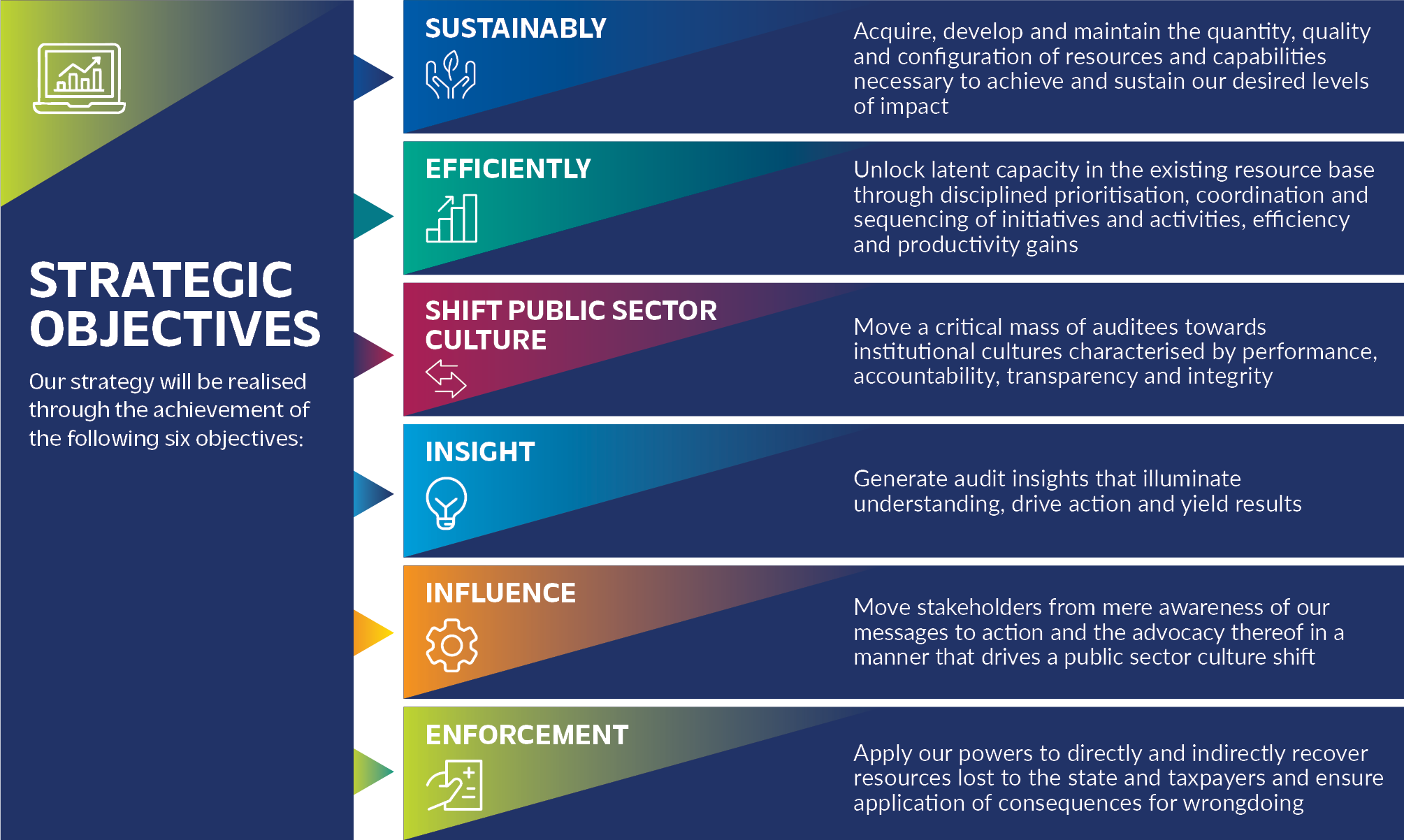
Our strategy implementation journey
Our strategy implementation timeline #cultureshift2030 strategy
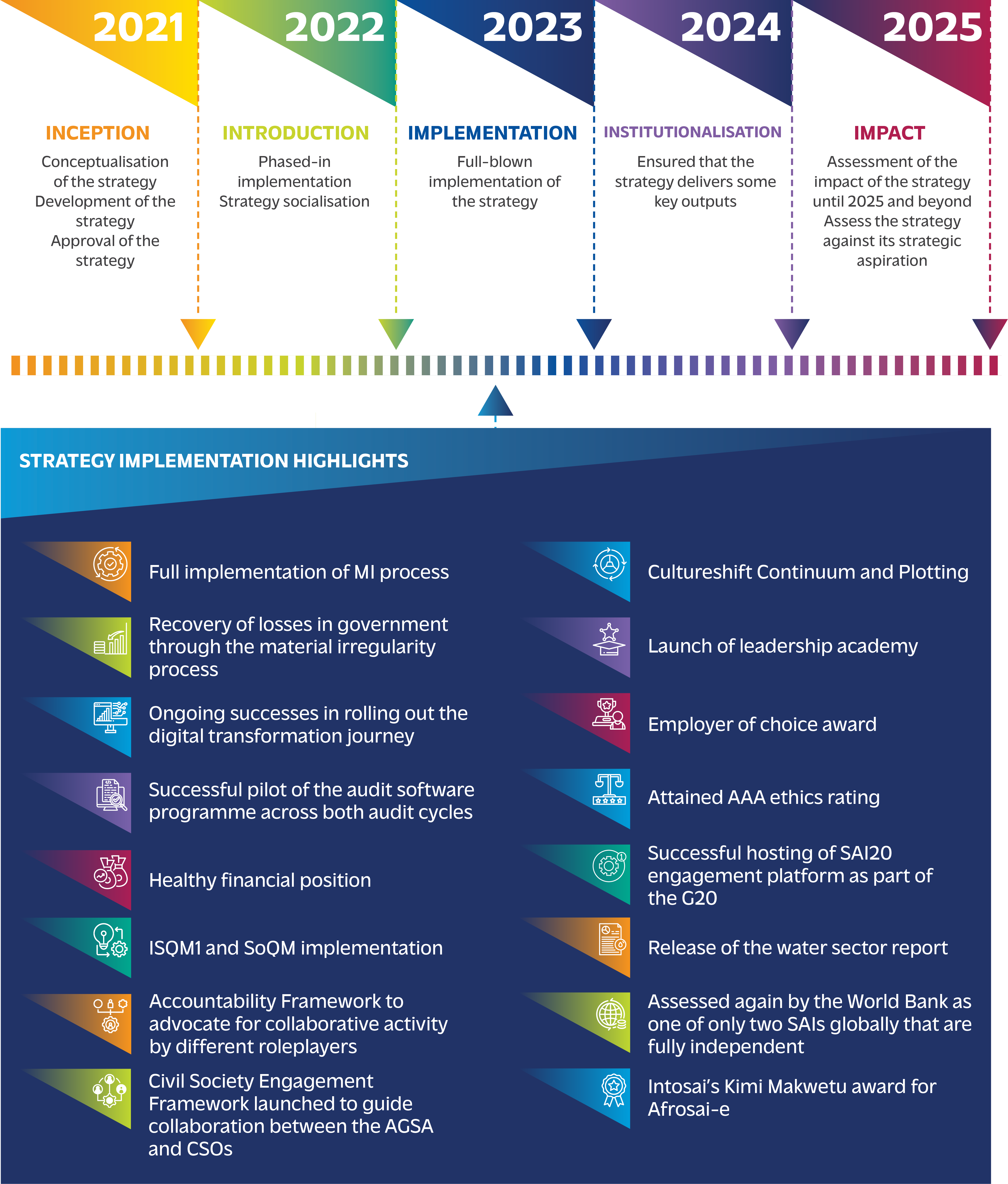
The #cultureshift2030 guide
Below are explanations to orientate our stakeholders on key #cultureshift2030 concepts and terminology:
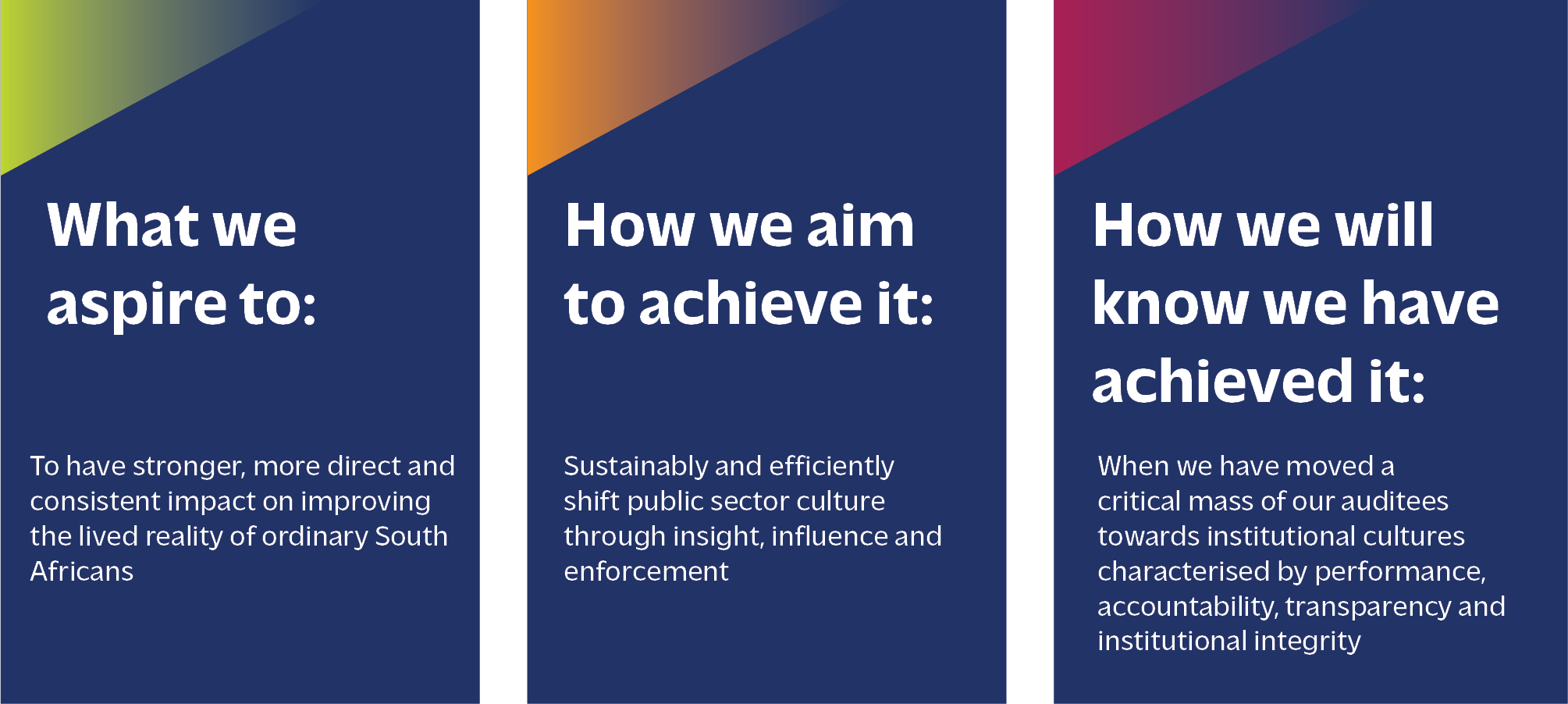
The #cultureshift2030 strategy in a nutshell
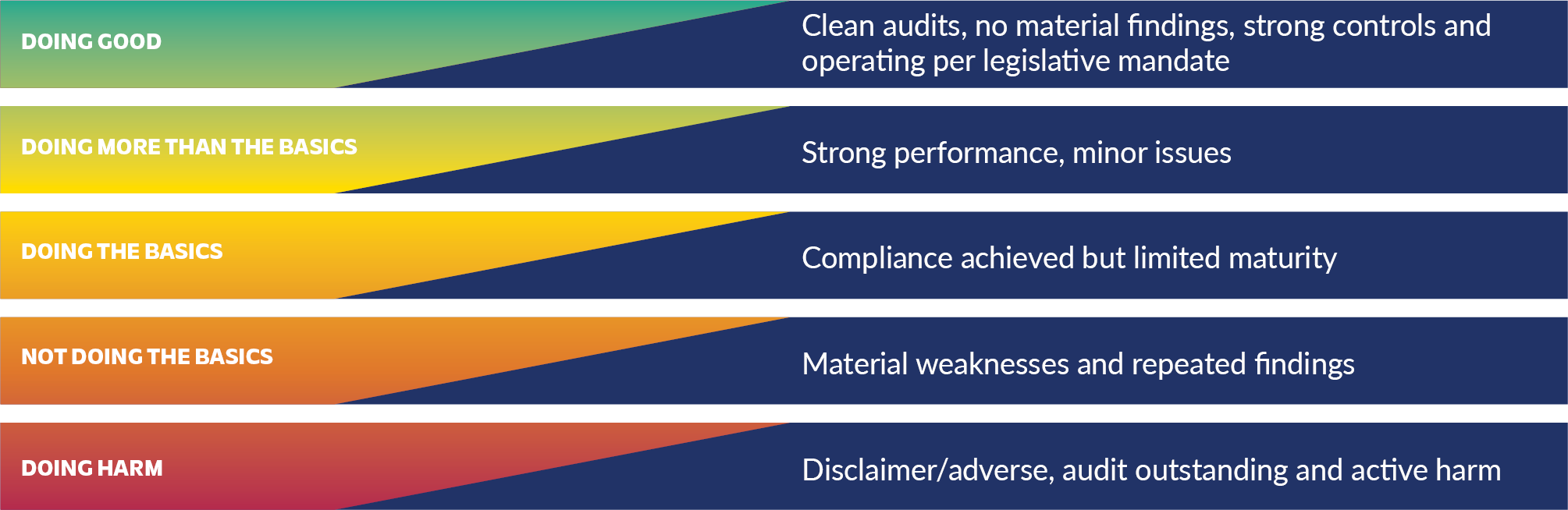
Cultureshift continuum:
The categories along which the AGSA plots its auditees based on their audit outcomes. These range from the lowest category, ‘doing harm’ to the highest, ‘doing good’. Descriptions of each category are provided below:
#cultureshift2030 intent:
To move a critical mass of our auditees towards institutional cultures characterised by performance, accountability, transparency and institutional integrity, depicted in the visual below (using the cultureshift continuum):
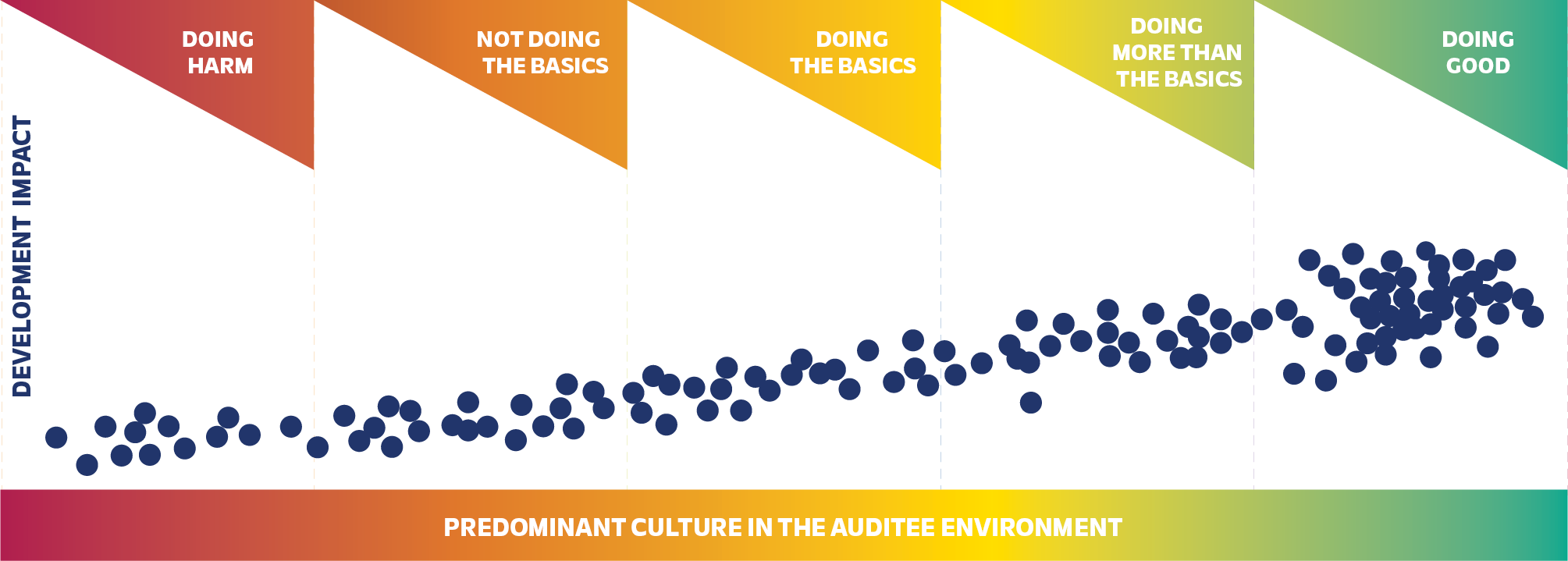
The AGSA’s #cultureshift2030 strategic intent (depicted through the cultureshift continuum)
#cultureshift2030 programme: The AGSA’s structured plan and tactics for achieving its strategic intent of shifting a critical mass of auditees towards institutional cultures signified by performance, accountability, transparency and institutional integrity by 2030.
The AGSA defines this ‘critical mass’ as auditees that collectively make up at least 30% of the national fiscus.
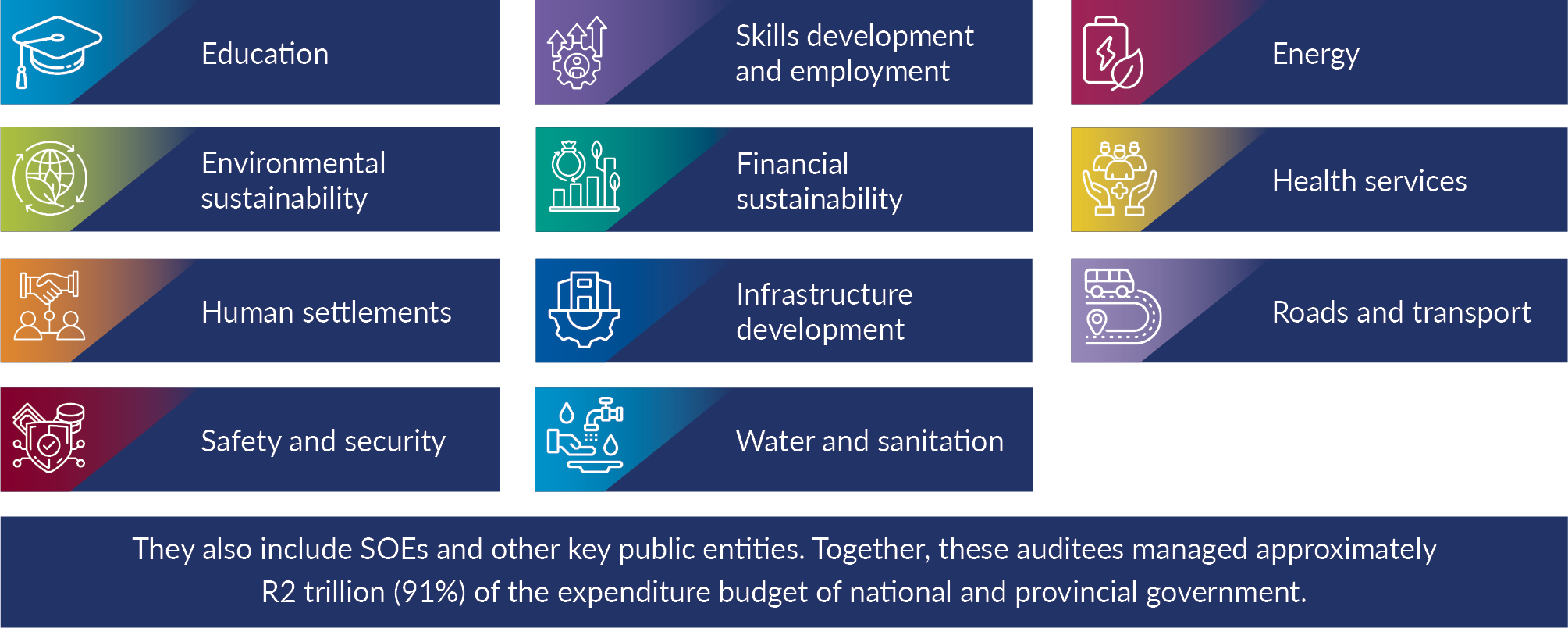
High-impact auditees: Auditees whose mandate and work have the closest link to the everyday lives of ordinary South Africans. They also individually and collectively receive the largest budget allocations from the national fiscus and include all eight metropolitan cities.
The auditees termed ‘high impact’ contribute to delivering:
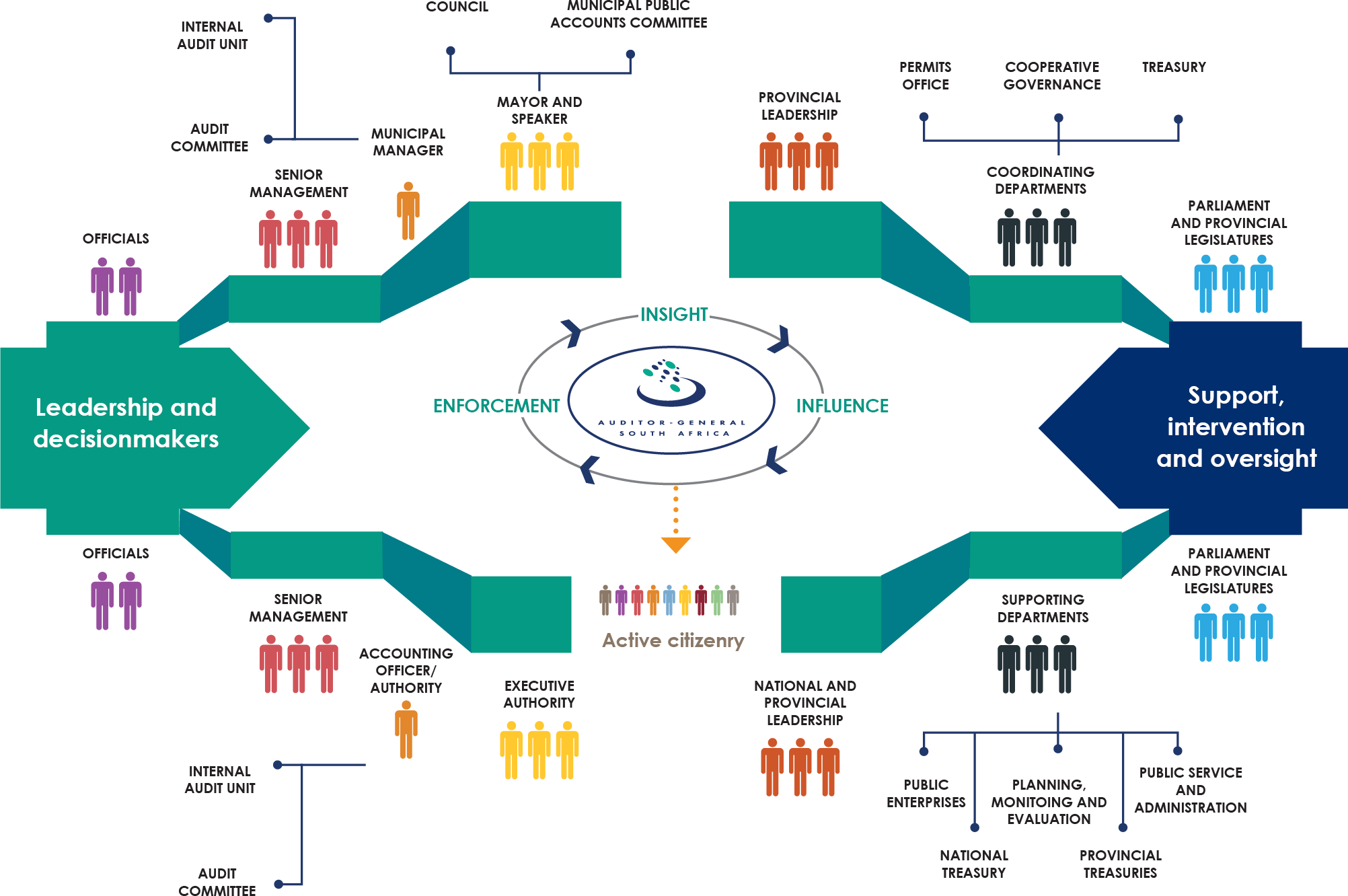
Accountability ecosystem
A broad-based network of stakeholders that drives and deepens public sector accountability. Each stakeholder group drives public sector performance, transparency, accountability and integrity. All accountability ecosystem members also collectively bear responsibility for ensuring that all stakeholders in the national system of governance contribute to resolving weaknesses in public institutions.
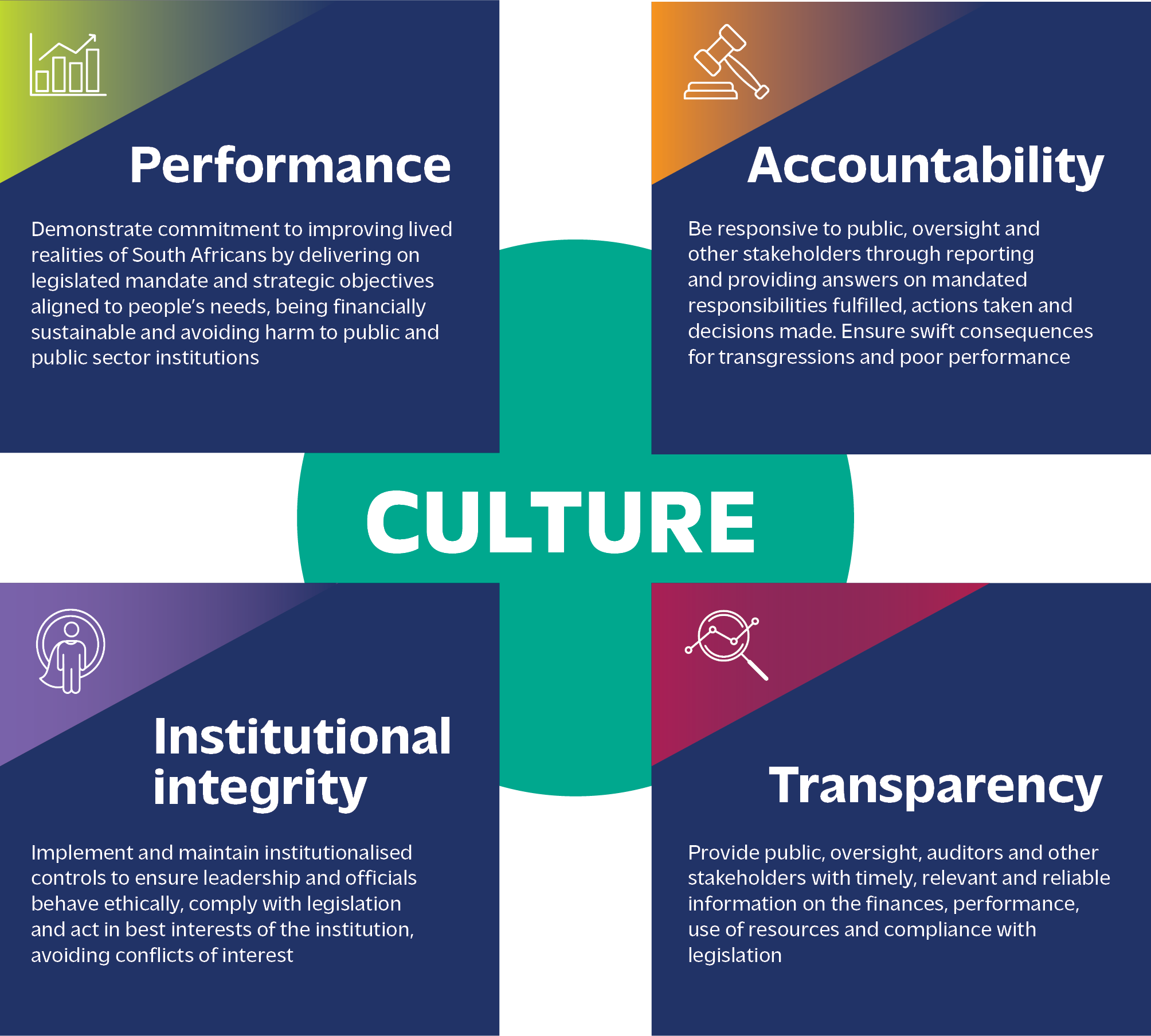
Performance, accountability, transparency and institutional integrity framework
The Pati framework is based on our strategic intent of moving a critical mass of auditees towards institutional cultures premised on performance, accountability, transparency and institutional integrity. The institution uses the framework to analyse and structure audit insights across local, provincial and national government spaces.
Yellow-zone auditees
Auditees with financially unqualified audit outcomes but with significant or material findings on either their audit of performance information or matters of compliance, especially those relating to supply chain management.
They are relevant in the context of #cultureshift2030 because they often relate to the issues most closely linked to auditees’ service delivery mandates (and, thus, have an eventual impact on service delivery itself and, consequently, on the lived realities of ordinary South Africans).