

Latest stories
Auditor-General calls for the accelerated provision of quality education to children
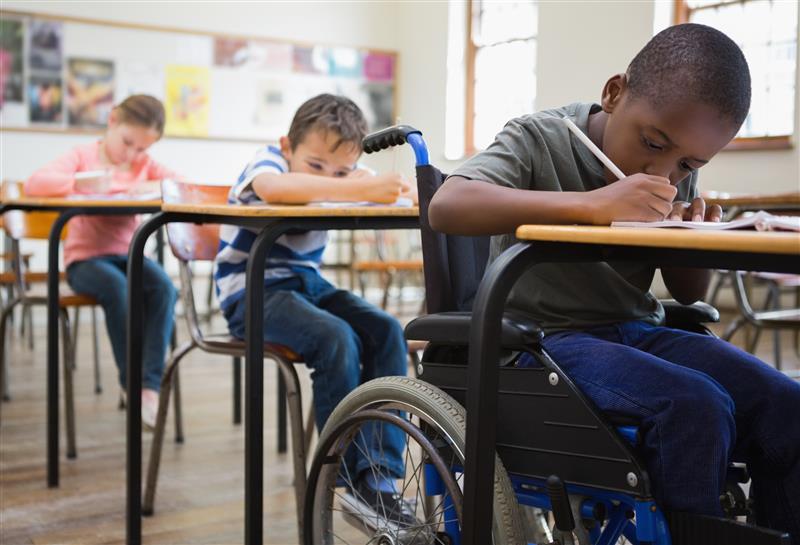
CAPE TOWN – Auditor-general (AG) Tsakani Maluleke has called on government to put more effort in ensuring equitable and quality education for children with disabilities.
Tabling the national audit office’s performance audit report on the progress that South Africa has made in catering for the education needs of children with disabilities, Maluleke said while noticeable strides have been made in this regard, “there are deficiencies identified which require urgent attention”.
As a signatory to the United Nations (UN) Sustainable Development Goals (SDGs), South Africa is expected to continuously monitor and report on the progress towards achieving the agreed-upon targets and recognisable progress by 2030.
The AGSA’s report (available on www.agsa.co.za) sought to assess the country’s progress towards SGD 4.5, with a focus on providing equal and equitable quality education for children with disabilities by 2030.
Audit focus
Says the AG: “The UN member states recognised that supreme audit institutions like ours could make valuable contributions towards achieving the SDGs by tracking progress, monitoring implementation and identifying improvement opportunities. As South Africa is implementing mechanisms to track and monitor the attainment of SDG goals, the country is expected to demonstrate unequivocal commitment to eradicate poverty in all its forms, end discrimination and exclusion, and reduce the inequalities and vulnerabilities that leave people behind and undermine the potential of individuals and of humanity as a whole.
“To assess the commitment to the SDG principle of leave no one behind, the AGSA selected the SDG 4.5 target, which calls for eliminating gender disparities in education and ensuring equal access to all levels of education and vocational training for vulnerable groups, including persons with disabilities, indigenous people and children in vulnerable situations by the year 2030.”
The AGSA opted to narrow the focus of SDG 4.5 to providing equal and equitable quality education for all children with disabilities, with the audit focusing on, among others, the legal and policy framework; data and information management; collaboration and coordination; resources allocation; as well as monitoring and support.
What the audit found
Among others, the AGSA identified these deficiencies in the implementation of the policy framework:
- The Department of Basic Education (DBE) did not fully implement the propositions of the 2001 Education White Paper 6 on Special Needs Education
- The early childhood development (ECD) of children with disabilities propositions articulated in the 2016 White Paper on Disability Rights were not fully implemented by the Department of Women, Youth and Persons with Disabilities (DWYPD).
“Our audit insights reveal that the limited support offered by district-based support teams affects the provision of quality education to learners with disabilities. Also, inadequate tracking and provision of quality education to children aged between zero and four years will affect the attainment of SDG 4.5 target by 2030,” cautioned the AG.
On data and information management, the audit found that:
- The DBE did not ensure that data on learners with disabilities was accurately and consistently captured in the South African School Administration Management System (SA-SAMS)
- Inconsistencies were identified in how key roleplayers reported the number of children with disabilities in the country.
The AG notes that regular, consistent and accurate capturing of data of learners with disabilities enables the country to set realistic targets and indicators. Understanding the number of children with disabilities attending school and not attending school is essential for planning and monitoring progress in achieving SDG 4.5.
The audit also found inadequate collaboration and coordination as key roleplayers did not effectively collaborate to plan, monitor implementation and report interventions and programmes to address the educational needs of children with disabilities aged between zero to five (5) years.
“Addressing the educational needs of children with disabilities aged between zero to four (4) years is important to identify any disabilities early in the child’s life and to also afford schools the opportunity to anticipate the number of learners with disabilities and the nature of their disabilities,” says Maluleke.
On resource allocation, auditors found:
- Inadequate provision of transport to learners with disabilities: Learners with disabilities requiring specialised transport at full-service schools were not provided with specialised transport and those who used the mainstream scholar transport were not provided support to cope
- School infrastructure is not suitable to cater for the educational needs of learners with disabilities
- Inadequate number of teachers qualified in inclusive education or special needs education
- Inadequate provision of assistive devices to cater for children with disabilities.
The AG urges the key roleplayers “to review resource allocation to provide access to quality education for learners with disabilities on transport, infrastructure, funding, qualified and trained teachers and assistive devices. Improve the use of annual basic management processes to evaluate schools’ capability to address the educational needs of children with disabilities, set up improvement plans, monitor the implementation of the plan quarterly and assess the achievement through annual academic performance plans.”
The report also reveals these monitoring and support shortcomings:
- Requests for assisting learners identified as having severe disabilities were not addressed timeously by the education districts
- Education districts did not ensure that full-service schools are provided effective monitoring and support to ensure that children with disabilities receive equal and equitable quality education.
The AG says a strengthened district-based support team (DBST) would enable a mechanism to timeously address the educational needs of learners with disabilities and be able to arrange professional support when required.
Call to action
Maluleke called on the departments of education and all other key roleplayers responsible for addressing the educational needs of children with disabilities to heed and urgently address the following, for the country to meet its SDG 4.5 targets:
- Catch them young: Introduce measures to address educational needs for children with disabilities that are below 5 years
- Leave no one behind: Implement measures for addressing educational needs of children with disabilities not attending school. Regular, accurate update and upkeep of data on the children with disabilities
- Enable schools to function: The departments of education should review and develop a plan to improve resource allocation to schools servicing learners with disabilities. Ensure that resources are fit for purpose for learners with disabilities
- Working together for a common vision: Strengthen the inter-departmental collaboration and coordination of initiatives and implementation mechanism for addressing the educational needs of children with disabilities.
Government response
The AG says the national audit office is encouraged that government has started to or is already addressing some of the findings and recommendations of the national audit office. For example, the DBE reports, among others, that:
The DBE minister has established the ministerial task team on the review of the Education White Paper 6, 2001, and that team has already produced a draft report on this review. The review has already reached an advanced stage and should be finalised by the end of the current financial year
Regarding the inadequate number of teachers trained in specialised needs education, the DBE collaborated with the British Council to train in-service teachers and develop the initial teacher education curriculum
- To remedy data inaccuracy, the DBE has started working towards ensuring that the data on learners with disabilities is accurately and consistently captured in the SA-SAMS
- In terms of providing integrated support to advance the needs of the disabled children, the DBE reports that there are already intersectoral collaborations with:
The DWYPD to provide progress on access to education for learners with disabilities as per the matrix for the 2016 White Paper on Disability Rights.
The Independent Communications Authority of South Africa and the Department of Communications and Digital Technologies to implement the provision of ICT and assistive devices to special schools as indicated in the DBE’s annual reports.
The Department of Justice and Constitutional Development (DoJ&CD) and the Department of Social Development (DSD) monitor the provision of educational programmes for children in conflict with the law and those in need of protection as indicated in the DBE’s reports.
Conclusion
The provision of equal and equitable quality education for children with disabilities is a human right captured in the UN Convention on the Rights of Persons with Disabilities, the UN Convention on the Rights of the Child, the UN Educational, Scientific and Cultural Organisation (Unesco) 1960 Convention against discrimination in education and the South African Constitution.
“While our report articulates and acknowledges the achievements made to date, there are still deficiencies we identified and these require urgent attention for the betterment of our children’s lives. The different roleplayers in the accountability ecosystem all have a mandate and/or responsibility – whether legislative, moral or operational – to drive, deepen and insist on accountability that will ensure the betterment of our children’s lives through equal, equitable and quality education,” concluded the AG.