

Latest stories
AG delivers key lecture at the FW de Klerk Foundation on local government accountability
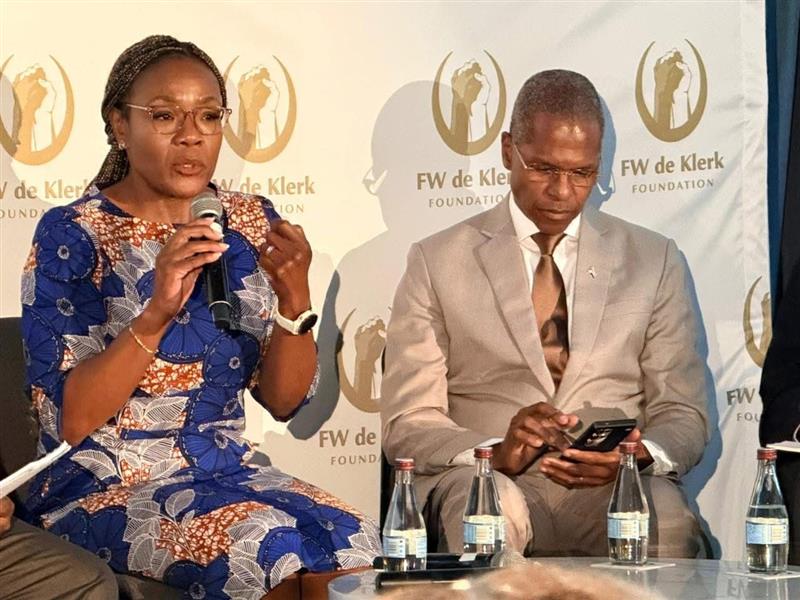
The Auditor-General of South Africa (AGSA), Ms Tsakani Maluleke, has called for sustainable improvement in local government beginning with deliberate choices in appointing competent individuals, strengthening institutional capacity and fostering a culture of integrity.
The thought-provoking lecture was hosted by the FW de Klerk Foundation and the Konrad-Adenauer-Stiftung (KAS) at the Radisson Collection Hotel in Cape Town on 3 February 2026 under the theme: “Local government elections 2026: chances and challenges for municipalities to fulfil their constitutional mandate”.
It brought together key leaders from across government, civil society and the diplomatic community to reflect on the state of local governance as South Africa prepares for the 2026 local government elections.
In her address, the auditor-general underscored the critical role of Chapter 9 institutions in safeguarding South Africa’s constitutional democracy. As the country’s supreme audit institution, the AGSA continues to audit and report on the financial statements, compliance with legislation and performance information of all government departments and entities funded by the fiscus.
She highlighted that 2026 marks 115 years of public sector auditing by AGSA, reinforcing the institution’s long-standing commitment to promoting transparency, accountability and effective use of public resources.
The lecture emphasised that credible auditing is not merely a compliance exercise, but a cornerstone of democratic governance. By publishing audit insights, AGSA enables Parliament, legislatures, municipal councils and citizens to hold public representatives accountable.
Focusing on local government, Ms Maluleke painted a candid picture of the challenges facing municipalities, noting the continuing trend of poor audit outcomes with only forty-one (41) out of 257 municipalities achieving clean audits in the 2023–24 financial year.
She further highlighted that:
- 13 municipalities failed to submit financial statements and performance reports by the legislated deadline
- 11 municipalities received disclaimed audit opinions, meaning auditors could not find sufficient evidence to support most of the information presented
- municipalities spent R848,85 million on consultants in 2023–24, with limited impact on improving financial reporting in many cases.
These governance weaknesses, she cautioned, have direct consequences for communities in the form of service delivery failures, stalled infrastructure projects and growing public frustration.
Behind every audit finding, she stressed, are real communities experiencing interrupted water supply, incomplete housing projects and delayed sanitation services.
The auditor-general also reflected on the strengthened powers granted through amendments to the Public Audit Act, enabling AGSA to issue material irregularities where significant financial loss, misuse of public resources or harm to the public is identified.
At municipal level, these powers have already yielded tangible results, with R1,32 billion prevented from being lost or recovered, funds that can now be redirected towards improving services to citizens.
This enforcement mechanism has encouraged greater responsiveness among accounting officers, executive authorities and oversight bodies, reinforcing the accountability ecosystem.
A call for capable leadership and active citizenship
As the country approaches the 2026 local government elections, Ms Maluleke urged political leaders, municipal administrations and citizens alike to recognise the importance of capable leadership, ethical conduct and consequence management.
She emphasised that sustainable improvement in local government begins with deliberate choices, appointing competent individuals, strengthening institutional capacity and fostering a culture of integrity.
The 2026 elections, she noted, are not merely political contests but a referendum on whether municipalities can fulfil their constitutional mandate and improve the lived realities of communities.
Concluding her lecture, she called for active citizenship and collective responsibility in strengthening governance and restoring trust in democratic institutions.
Advancing dialogue on governance
AGSA’s participation in this platform reaffirmed its commitment to engaging in constructive dialogue with stakeholders across society. By contributing to national conversations on governance, financial management and accountability, AGSA continues to position itself as a trusted guardian of public resources and a key pillar in supporting South Africa’s constitutional democracy.
The lecture served as both a reflection on the progress made and a candid reminder of the work that remains to ensure that local government delivers effectively, transparently and in the best interests of the people it serves.